Steward Job Description
A clear-eyed guide to the steward role at sea: what the job involves day to day, the certificates it requires, the pay and conditions, and where it can lead.
Ask what a ship’s steward does and you will get two completely different answers, because two completely different jobs hide under one word.
On a cargo ship, the steward is one or two people keeping a crew of twenty fed, clean, and rested in a steel box at sea, the entire hotel side of the vessel run by a tiny team. On a cruise ship or a superyacht, the steward is the first rung of a vast hospitality operation, the entry point to a career that can climb toward running a floating five-star hotel.
Same job title, same starting skills, utterly different worlds, and most descriptions of the role blur the two into a vague picture of someone who tidies cabins. The truth is more interesting, and far more useful if you are thinking of doing it.
One Job Title, Two Different Worlds
The split matters because it shapes everything: the duties, the pay, the certificates, and the career ahead. On a merchant cargo ship, the catering department is small, often just a cook and a steward or messman, and there are no guests, only the ship’s own crew. The work is housekeeping and galley support: clean accommodation, fed crew, an orderly mess. It is unglamorous, essential, and crew-focused.
On cruise ships and superyachts, the same starting role sits at the bottom of a large, guest-facing hotel operation with hundreds of hospitality staff and a proper career ladder. Here the steward is part of an industry built around service to paying passengers or owners, where polish, presentation, and guest experience are the product. A cargo-ship steward and a cruise-ship steward share a name and a few core skills, but they are doing different jobs in different industries that happen to float. Keep that distinction in mind and the rest of the picture comes into focus.
Where the Steward Fits: The Catering Department
On a merchant ship the steward belongs to the catering department, the smallest of the three traditional departments alongside deck and engine. It is headed by the chief cook or chief steward and sits, like every department, under the master’s overall command. On a large vessel there may be a clear chain, a chief steward over stewards and messmen, but on a typical cargo ship the whole department might be two people who divide the cooking and the housekeeping between them.
The titles describe a rough ladder. A messman (or messboy) is the entry hand, serving and clearing in the mess and helping wherever needed. A steward takes on the housekeeping of the accommodation and the support of the galley. A chief steward or chief cook runs the department, plans the provisions, and answers for the catering side of the ship. It is worth knowing that under the Maritime Labour Convention (MLC 2006), the international standard for seafarers’ working and living conditions, the term “catering staff” formally includes stewards, which is why the food-hygiene rules covered below apply to them directly.
What the Job Actually Involves
Strip away the vagueness and the day is concrete. The steward keeps the accommodation block fit to live in: cleaning cabins, changing linen, servicing the toilets and showers, vacuuming and sweeping the alleyways, and keeping the mess rooms, lounges, and the officers’ saloon and pantry clean and stocked. Much of this happens early, before the off-going watch turns in and the on-coming watch rises, because a ship’s accommodation is in use around the clock and the windows to clean it are narrow.
The galley side is just as real. The steward assists the cook with preparation and service, sets and clears tables, runs the dishwashing, replenishes the pantry, and helps manage provisions, receiving stores in port and rotating stock so nothing spoils on a long voyage. Laundry, garbage segregation, and keeping the catering spaces compliant with hygiene standards all fall in here too. And all of it is done aboard a moving platform, where a rolling ship turns carrying a loaded tray or stacking clean crockery into a balancing act, and tight storage and long hours are simply the conditions of the work.
The payoff is genuine: clean cabins and an orderly mess are a large part of what lets a tired crew actually rest, and rest is what keeps a ship safe.
The Hidden Half of the Job: Safety Duties
What job descriptions routinely miss is that a steward is not only catering staff; like every person aboard, they are a number on the muster list, with an assigned station and a job when the alarm sounds. Stewards take part in the regular drills, and in an emergency their duties are real, helping to account for and marshal people, assisting in stretcher or first-aid parties, and supporting the wider response that every crew mounts for itself. The principles behind those duties are the same ones that run through the ship’s safety routines, and the steward is part of them.
This safety role grows sharply on passenger ships. There, stewards and hospitality crew are often the people closest to the passengers when something goes wrong, which is why passenger-ship crew carry additional training in crowd management and passenger safety. The friendly face who served dinner is also, when it counts, part of the team that gets a thousand strangers calmly to their muster stations.
Certificates and Requirements
The encouraging news for newcomers is that the steward role is one of the more accessible ways to sea: attitude, reliability, and a willingness to work often matter more than experience, and much of the trade is learned on board. The non-negotiable parts are the certificates, and they are not optional.
Every seafarer needs STCW Basic Safety Training, four short courses, personal survival techniques, fire prevention and firefighting, elementary first aid, and personal safety and social responsibilities, usually with security awareness training as well.
You need a seafarer medical fitness certificate (the ENG1 in the UK, or its equivalent elsewhere) proving you are fit for sea, plus a passport, a discharge book to record your service, and any visas your trade requires. Because stewards count as catering staff who handle food, the MLC requires them to be trained in food and personal hygiene and the safe handling and storage of food, including an awareness of allergens and cross-contamination.
The full Ship’s Cook Certificate is a separate, higher qualification required of the cook on ships with ten or more crew or operating well offshore, not of the steward, though knowing it exists explains the step above you. On passenger ships, add the crowd-management and passenger-safety training noted earlier. Together these are the price of admission, and a candidate who already holds them is far easier to hire.
Pay, Contracts, and the Reality of the Work
Pay varies too widely to reduce to a single figure, and anyone quoting you one without context is guessing. It depends on the type of vessel, the flag and the company, whether the ship is covered by a union or international transport workers’ agreement that sets minimum wages, and, on cruise ships and yachts, on gratuities that can form a large part of the package. A messman on a cargo ship and a stewardess on a busy superyacht are paid in different worlds, and the latter, with the right tickets and the right boat, can do well.
The conditions are demanding and worth being honest about. Seafarers work to contracts, often months on followed by leave, living aboard for the whole tour with the same small group of people, far from home. The hours are long, the work is physical, and the ship does not stop for weekends.
In return, the job offers paid travel, savings that build while living costs are covered, real camaraderie, and a genuine foot in the door of a maritime career, which is a fair part of why people choose life at sea in the first place.
Where It Leads: The Career Map
The steward role rewards the people who treat it as a starting point, and where it leads depends again on which world you are in.
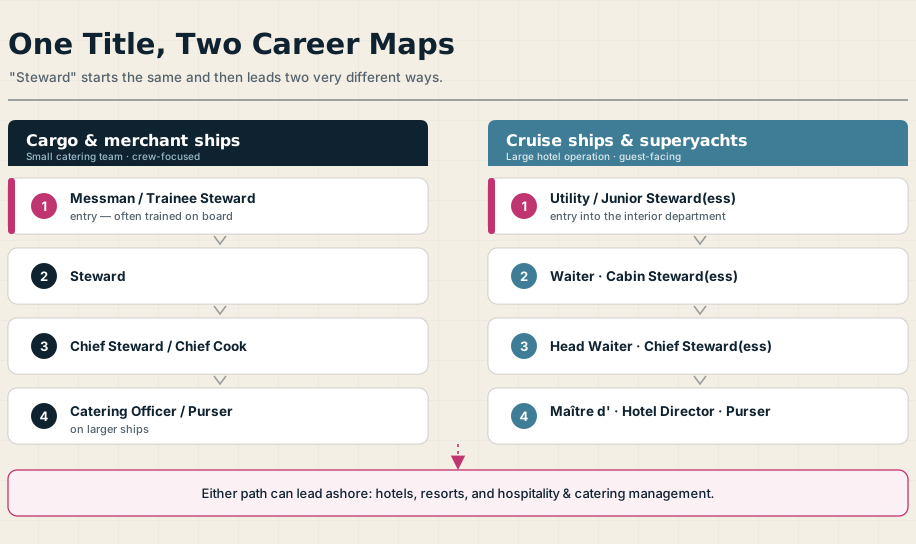
On cargo ships the path runs from messman to steward to chief steward or chief cook, and on larger vessels toward catering officer or purser, the senior catering and administrative roles aboard. On cruise ships and superyachts the ladder is taller and steeper, climbing through waiting and cabin-service grades into head-of-department roles and, ultimately, the hotel management that runs the entire guest operation. And because the skills are portable, both paths open doors ashore, into hotels, resorts, and hospitality and catering management, where time at sea reads as exactly the kind of disciplined, adaptable service experience employers want.
The role teaches organization, teamwork, and grace under pressure in a confined, demanding environment, and that foundation carries, which is why it appears so often near the start of a maritime career.
Frequently Asked Questions
These are the questions people ask most about the steward role at sea, from what the job involves to what it takes to start. Here are the short answers.
What does a steward do on a ship?
On a cargo ship a steward keeps the accommodation clean and the crew fed and rested: cleaning cabins, changing linen, servicing mess rooms and the officers’ saloon, assisting the cook, handling provisions, and doing the laundry and dishwashing. On a cruise ship or yacht the role is guest-facing hospitality, the entry point to a much larger hotel operation.
What qualifications do you need to be a ship steward?
You need STCW Basic Safety Training (survival, firefighting, first aid, and personal safety), a seafarer medical fitness certificate such as the ENG1, and a passport and discharge book. Because stewards handle food, the MLC requires food and personal hygiene training. Entry-level positions often train you on board, but those core safety, medical, and hygiene certificates are required.
Is a steward the same as a ship’s cook?
No. The steward supports the galley and runs the housekeeping, while the cook prepares the food and holds a separate, higher qualification, the Ship’s Cook Certificate, required on ships with ten or more crew or operating well offshore. On a small ship one person may do both, but they are distinct roles with distinct certificates.
Do stewards have safety duties?
Yes. Like every crew member, a steward has a station on the ship’s muster list and a role in drills and emergencies, such as accounting for and marshalling people and assisting first-aid parties. On passenger ships stewards carry additional crowd-management and passenger-safety training, because they are often closest to the passengers when something goes wrong.
What career path does a steward have?
On cargo ships, messman to steward to chief steward or chief cook, and toward catering officer or purser on larger vessels. On cruise ships and superyachts, the ladder climbs through service grades into head-of-department and hotel management roles. Both can also lead ashore into hotels, resorts, and hospitality and catering management.