Merchant Marine Career Paths
A map of the seafarer's ladder: the three departments, the STCW levels from rating to senior officer, how to get your first ticket, and where a career at sea can lead.
At sea you are not promoted because someone likes you. You are promoted because you hold the certificate the next rank legally requires, and you cannot hold that certificate until you have logged the sea time and passed the exams that go with it.
It sounds rigid, and it is, but it is also the great clarity of a maritime career: the ladder is written down, it is broadly the same the world over, and anyone standing on the bottom rung can see exactly what the next one costs. A merchant marine career is less a gamble on being noticed than a structured climb where the price of every step is known in advance. Understanding that structure is the difference between drifting through a few contracts and building a profession.
A Career Built on Certificates
The framework that governs all of this is the international STCW convention, the Standards of Training, Certification and Watchkeeping, and its central instrument is the Certificate of Competency, the CoC. A CoC is a license to hold a particular level of responsibility on a particular size of ship, issued by a flag administration and recognized worldwide.
You earn each one the same way: a fixed amount of qualifying sea time, a set of approved courses, and written and oral examinations, the dreaded “orals” where an examiner probes whether you actually understand the ship you propose to run. A CoC is not for life either; it must be revalidated, typically every five years, with recent sea service or refresher training.
Underneath it all sit the universal requirements every seafarer carries: a valid medical fitness certificate, the basic safety training, and a discharge book that records every day of sea time you will one day need to count.
This is why the certificate, not the years, is the real currency of a maritime career. The structure it creates is best understood not department by department but level by level.
The Three Levels Everyone Climbs Through
STCW sorts every seafarer, in any department, into one of three levels of responsibility, and the whole career ladder is really these three rungs repeated across the ship.
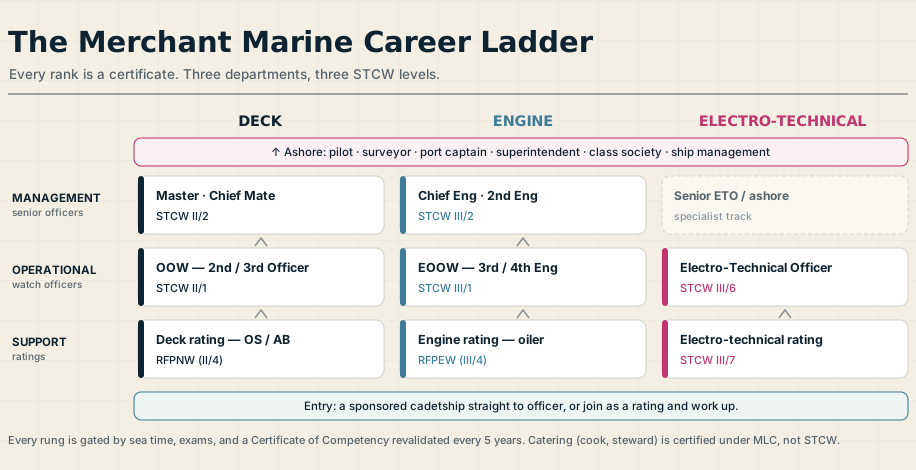
The support level is the ratings: the trained hands who do the physical work of the ship under an officer’s direction. The operational level is the watch officers, the people who actually run a watch on the bridge or in the engine room, qualified but not yet in charge of the whole department.
The management level is the senior officers who carry overall responsibility, the master and chief mate on deck, the chief and second engineer below. A career is the journey up these three levels, and the certificates that mark the boundaries are the same idea in each department, which is exactly what the ladder above shows.
The Deck Department
The deck department runs the ship’s navigation, cargo, and safety, and its ladder is the most familiar image of a sea career. Many start as a deck rating, an ordinary then able seafarer, learning seamanship, mooring, and lookout and watch duties from the deck up.
The first officer’s ticket is the Officer of the Watch, certified under STCW II/1, the qualification a third or second officer holds to take charge of a navigational watch on a ship of 500 gross tonnage or more, with the responsibility for planning and running a passage that implies. Above that, at the management level, sit the chief mate and the master, both certified under STCW II/2, the chief mate heading the deck department and running cargo, the master in overall command with a legal authority that no one else aboard shares.
Each step demands more sea time in the rank below: a year as an officer of the watch before chief mate, three years’ command-track service before master.
The Engine Department
Below decks, the engine department keeps the ship alive, and its ladder mirrors the deck’s rung for rung. Entry is as an engine rating, a wiper or oiler supporting maintenance and watch routines in the machinery spaces.
The operational ticket is the Engineer Officer of the Watch, certified under STCW III/1, held by third and fourth engineers who run an engineering watch and tend specific systems. The management level belongs to the second engineer, who runs the day-to-day operation of the engine room, and the chief engineer, who carries total responsibility for the ship’s machinery, both certified under STCW III/2.
It is demanding, unglamorous, and indispensable work: machinery does not break down at convenient hours, and the engineers are the people expected to diagnose and fix it at three in the morning in a seaway.
Beyond Deck and Engine: ETO and Catering
Two more departments complete the picture. The electro-technical department is the newest, a response to ships that have become floating networks of electrical, electronic, and automation systems. The Electro-Technical Officer, certified under STCW III/6, and the electro-technical rating beneath, handle the power management, control systems, and increasingly the high-voltage installations that modern container ships, gas carriers, and cruise vessels depend on, a specialism that has grown from a niche into an officer department in its own right.
The catering department, by contrast, is certified not under STCW but under the Maritime Labour Convention: the cook holds an MLC ship’s cook certificate, and the steward sits within the catering staff, a route described in detail in the steward job description. Different rules, but the same idea of a defined ladder applies.
Two Ways In: Cadet or Rating
There are two honest ways onto the officer track, and neither is wrong. The first is a sponsored cadetship: a shipping company or training berth pays for a structured program, usually around three years, that alternates academic study ashore with sea phases aboard, and delivers you to your first officer of the watch certificate at the end. It is the fast, direct route to an officer’s license, and the sponsorship means you are often paid to train.
The second is the ratings route: you join as a rating, earn while you learn the ship from the deck or the engine room, accumulate sea time, and then bridge up into officer training later. It is slower, but it builds a depth of practical seamanship that shows, and it suits those who want to be at sea now rather than in a classroom first.
Both end at the same certificates; what differs is the order in which you spend the time and the money, and which kind of life at sea you want first.
Endorsements, Specializations, and the Move Ashore
A CoC opens the main ladder, but extra endorsements open the doors that pay. Tanker work needs oil, chemical, or gas qualifications; passenger ships need crowd-management and crisis training; dynamic-positioning vessels need a DP operator’s ticket; modern ships increasingly need high-voltage and advanced electronic endorsements.
Particular trades, LNG carriers, offshore support vessels, cruise ships, each demand their own specialist training, and each rewards it with higher pay and scarcer competition. Pay across all of this varies far too widely to reduce to a number, depending on rank, vessel type, flag, and company, but the pattern is steady: every certificate you add widens the field of ships you can work and the rate you can command.
The ladder does not stop at the gangway, either. A senior CoC, a master’s or a chief engineer’s especially, is a passport ashore.
Former officers become harbor pilots, surveyors, port captains and superintendents, examiners and lecturers, and move into ship management, classification societies, and marine insurance. The sea teaches judgment, responsibility, and the management of complex systems under pressure, and the industry ashore knows it, which is why a career that begins on the bottom rung of the deck or engine ladder so often ends in a shore office that still runs ships, just from a desk.
Frequently Asked Questions
These are the questions people ask most about merchant marine career paths, from how you get your first ticket to where the career can lead. Here are the short answers.
What are the three departments on a merchant ship?
The deck department, responsible for navigation, cargo, and safety; the engine department, responsible for propulsion and machinery; and, increasingly, the electro-technical department for electrical and control systems. The catering department handles food and accommodation. Each has its own ladder from rating to senior officer.
What is the difference between an officer and a rating?
A rating is a trained seafarer who does the hands-on work of the ship under supervision, at the support level. An officer holds a Certificate of Competency and carries responsibility for a watch or a department, at the operational or management level. Ratings can train up to become officers; the dividing line is the certificate, not the experience alone.
What is a Certificate of Competency?
It is the license that authorizes a seafarer to hold a given level of responsibility on a given size of ship, issued under the STCW convention by a flag administration and recognized worldwide. You earn each one through qualifying sea time, approved training, and written and oral exams, and it must be revalidated, usually every five years.
How do I start a career in the merchant navy?
By one of two routes: a sponsored officer cadetship of about three years that mixes college and sea time and leads to an officer of the watch certificate, or by joining as a rating, building sea time, and bridging up to officer training later. The cadetship is faster to an officer’s license; the ratings route earns while you learn.
What jobs can a seafarer do ashore later?
A great many. Senior officers in particular move into harbor piloting, marine surveying, port captain and superintendent roles, examining and teaching, ship management, classification societies, and marine insurance. A master’s or chief engineer’s certificate is highly valued ashore precisely because of the responsibility it represents.