Maintaining and Inspecting Personal Protective Equipment at Sea
Salt, sun, and damp wear protective gear out faster than it looks. Here is how to inspect, service, store, and retire it, from everyday deck kit to SOLAS survival equipment.
The worst time to learn that a strap has rotted or a light will not strike is the moment you reach for the gear to save your life. PPE rarely fails loudly. It fails quietly: a frayed thread you stopped noticing, a zipper stiffened by salt, a lifejacket light battery that expired two ports back. Maintaining your personal protective equipment at sea is simply the discipline of finding those failures on a calm afternoon in port instead of in a black sea at three in the morning.
Two Kinds of PPE, Two Sets of Rules
Before you inspect anything, it helps to know which rulebook applies, because protective equipment aboard a ship falls into two broad families and confusing them is how good crews still end up with bad gear.
The first is everyday work PPE: hard hats, gloves, safety boots, eye protection, hearing defenders, coveralls, and fall-arrest harnesses. Maintaining this gear is largely your own responsibility, built on pre-use checks and condition-based replacement. The second is survival equipment, the life-saving appliances: lifejackets, immersion suits, and anti-exposure suits. This category is not yours to manage by feel. Its inspection intervals, servicing, and record-keeping are set by SOLAS Chapter III and the LSA Code, and Port State Control checks them line by line.
Treat the two the same way and you will either over-engineer the cheap gear or, far worse, apply casual deck habits to equipment a surveyor expects to find logged, serviced, and in date.
Why Protective Gear Ages Faster at Sea
Everything on a ship lives in a corrosive bath, and the reason PPE wears out faster afloat than ashore is not mysterious. Each cause attacks a specific weak point you can learn to watch.
Salt is the constant. It settles into webbing and fabric, draws in moisture, and abrades fibers from the inside as the gear flexes. Ultraviolet light is the silent one: sustained sun embrittles helmet shells and degrades the synthetic webbing in harnesses long before any change is visible. Humidity never lets up, so anything stored damp begins to mildew, delaminate, or stiffen. Add the chemical contact of a working deck, the oils, fuel, cleaning agents, and cargo residues, and you have a set of forces that turns “looks fine” into a poor measure of whether gear actually is fine.
The practical lesson runs through everything below: condition, not appearance, decides whether a piece of PPE still protects you.
Everyday Work Gear: Your Inspection, Your Responsibility
Most of the PPE you touch in a day carries no servicing certificate. Its reliability rests almost entirely on the habits of the person wearing it, which means you.
The Pre-Use Check That Takes Thirty Seconds
Every shift, before you trust a piece of gear, run your eyes and hands over it. Look for cuts, fraying, crushed or distorted hardware, stiffened fabric, and buckles that no longer close with a clean bite. Thirty seconds of attention before a job catches the failures that a glance from across the locker never will. Make it routine and it stops feeling like a chore and starts feeling like part of putting the gear on.
Hard Hats, Gloves, Boots, and Eye Protection
A safety helmet that has taken a real impact is finished, even if the shell looks untouched, because the energy-absorbing structure inside is designed to fail once. Beyond impacts, helmets carry a manufacture date and a manufacturer’s stated service life: observe both, and retire a shell that has spent years in tropical sun regardless of how it looks. Gloves lose their grip and tear once oils and saltwater stiffen them. Eye protection that has hazed or scratched no longer protects clearly and should be swapped out, not squinted through. None of these decisions is dramatic. The skill is making them early.
Fall-Arrest Harnesses: The Equipment That Protects You Once
Of all the work PPE aboard, fall-arrest equipment carries the least margin for neglect. A harness gets two layers of inspection: a tactile pre-use check by the wearer every single time it is worn, and a thorough examination by a competent person at intervals not exceeding six months, recorded and kept on file. In harsh conditions that formal interval tightens further. And the rule that matters most: any harness that has arrested a fall is removed from service and destroyed immediately, even if it looks perfect. Like a helmet, it is engineered to save you exactly once. Treating a post-fall harness as reusable is one of the most dangerous economies at sea, and good seamanship means never making it.
Survival Equipment: Where the Clock Is Not Yours to Set
With life-saving appliances, your judgment stops being the final authority. SOLAS sets the intervals, approved service stations do the deep work, and your job is to inspect, document, and never let a deadline slide.
Lifejackets and Their Forgotten Details
A lifejacket is more than its buoyancy. During monthly inspections you check the webbing and stitching, confirm the whistle is present and undamaged, verify the retroreflective tape is sound and still adhered, and check the expiry date on the light and its battery. An expired light is a real deficiency, not a footnote: in the water at night, it is what turns you from a dark shape into something a rescuer can find. Inflatable lifejackets go further, requiring service at an approved station at intervals not exceeding twelve months.
Immersion Suits and the Three-Year Pressure Test
The immersion suit is the most demanding piece of personal survival gear to maintain, because the things that kill it are invisible. Each month the suit is inspected and the crew practices donning it, confirming the zipper runs, the seals stay supple, and any inflatable head support holds air. Beyond that, the seams and closures must pass an air pressure test at an approved facility at intervals not exceeding three years, and every two years once a suit passes ten years of age, under MSC.1/Circ.1114. Adhesives and seams lose watertightness with age whether or not the suit has ever been worn, which is exactly why the test exists.
The Hydrostatic Release Trap
One detail catches crews who otherwise keep good records. A hydrostatic release unit has its own expiry, and an expired HRU on a liferaft that is itself in date is still a failure in a surveyor’s eyes. Check component dates, not just the headline service sticker, because Port State Control certainly will.
The Inspection Rhythm: Daily to Annual
Maintenance only works as a cadence, not a panic before a survey, and each layer catches what the others miss. The intervals below map who does what, and how often.
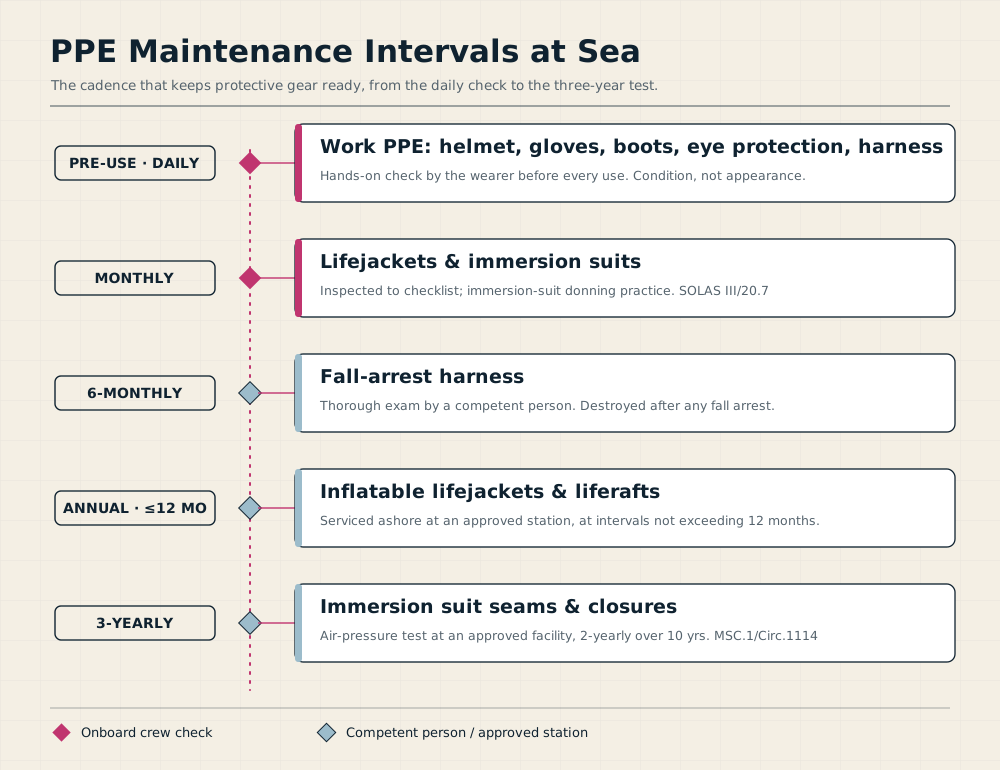
Daily and after-use care belongs to work gear: wipe off salt and grime, rinse and dry gloves, clean eye protection. Weekly and monthly inspections cover the life-saving appliances, where officers work through lifejackets, immersion suits, harnesses, and helmets against a set checklist, including function checks a visual pass cannot replace. Annual servicing sends the regulated items to approved stations. Underpinning all of it is documentation: inspection logs, signed by the person who did the work and countersigned by the Master, that prove to auditors and incoming crew the gear has been cared for consistently. Those records also surface the useful patterns, like a locker that repeatedly fails in tropical heat.
Storage That Actually Preserves Gear
Storage is not just finding somewhere to put equipment. Done badly, the store undoes everything the inspections achieved.
A good PPE store is dry, shaded, cool, and ventilated, because the same UV, heat, and moisture that age gear in use will age it just as fast on a shelf. Ships working the tropics sometimes run dehumidifiers in equipment rooms for exactly this reason. Compression is the other enemy: helmets sit upright rather than stacked, harnesses hang free rather than knotted in a heap, and immersion suits are folded to the manufacturer’s pattern so seals and zippers are not crushed into a permanent crease. Suits kept in airtight packaging still need their seal checked at least annually. When every crew member knows where their gear lives and how it should sit, retrieval is faster and inspections are more honest.
When to Retire, Not Repair
Every mariner eventually learns that some gear has to be landed long before it visibly fails, and knowing where that line sits is part of the job.
Some damage ends the conversation: a cut in a load-bearing strap, a crushed helmet shell, mildew inside a buoyancy chamber, a failing zipper on an immersion suit, any component past its expiry. These come out of service at once, and repair is not an option. The harder discipline is resisting the quiet temptation, common in newer crew, that a tired piece of gear might last “one more job.” It might. But the cost of being wrong is measured against the trivial inconvenience of fetching a sound replacement, and that math only ever points one way. Officers who enforce strict replacement standards are not being wasteful. They are being trusted.
Building a Culture of Readiness
Maintenance habits rarely live in a manual. They live in the tone the senior crew set and the new hands absorb.
A ship with clean gear, organized stores, and current inspection records is showing you something about how it runs long before any emergency tests it. New mariners take their cue from that standard, drills reinforce it, and the quiet conversations after a drill fix the small lapses before they harden into habits. It is also what a Port State Control officer reads in the first ten minutes aboard, and one reason the safety culture of a vessel is so often judged by the state of its equipment. A crew that takes its protective gear seriously builds a particular kind of trust: the confidence, in heavy weather or a black-night emergency, that the thing in your hands will do its job because someone made sure it would.
Frequently Asked Questions
Most questions come up again and again once the maintenance routine is in place. Here are the short answers to the ones cadets and officers ask most.
How often do immersion suits need to be pressure tested?
The seams and closures of an immersion suit must pass an air pressure test at an approved facility at intervals not exceeding three years, and every two years once the suit is more than ten years old, in line with MSC.1/Circ.1114. This is separate from the monthly shipboard inspection and donning practice.
Can a safety harness be reused after it has arrested a fall?
No. A fall-arrest harness is designed to absorb a fall once. After any fall arrest it must be removed from service and destroyed immediately, even if it appears undamaged. It should never be returned to the locker for reuse.
How often are inflatable lifejackets serviced?
Inflatable lifejackets must be serviced at an approved servicing station at intervals not exceeding twelve months, alongside the routine weekly and monthly shipboard inspections of all lifejackets.
Who is responsible for PPE maintenance on board?
It is shared. Individual crew run pre-use checks and daily care on their own work gear, while officers and the ship’s safety officer manage the scheduled inspection, servicing, and documentation of life-saving appliances under the vessel’s safety management system.
What is the difference between work PPE and life-saving appliances?
Work PPE, such as hard hats, gloves, and harnesses, is maintained mainly through user checks and condition-based replacement. Life-saving appliances, such as lifejackets and immersion suits, are governed by SOLAS with fixed servicing intervals, approved service stations, and records that Port State Control inspects.