How Tugboats Assist Ships
Small hulls, huge pull. How tugs push, pull, and escort big ships, what bollard pull and tug type really mean, and why girting is the danger that defines the job.
A modern ship is built to be efficient in open water, and that efficiency turns against her the moment she enters a harbor. A loaded container ship the length of three football fields carries enormous inertia even at a crawl, presents a wall of windage to any breeze, and answers her own controls slowly in shallow, confined water. Her thrusters fade to almost nothing above a few knots, and there is no sea room to recover a mistake.
The tugboat exists to fill exactly that gap: a small, ferociously powerful vessel that delivers controllable force precisely where and when the big ship cannot generate it herself. Watch a berthing from the quay and the tugs look like fussing terriers around a whale, but they are doing the part of the job the ship physically cannot.
What a Tug’s Power Is Measured In
The single number that defines a tug is its bollard pull, the steady pulling force it can exert measured at zero speed, quoted in tonnes. It is the honest measure of a tug’s strength, far more meaningful than engine horsepower, and it is what ports specify when they require so many tonnes of tug power for a ship of a given size.
A small harbor tug might offer thirty or forty tonnes of bollard pull; a modern terminal or escort tug commonly delivers sixty to ninety tonnes or more from a hull a fraction of the length of the ship it is moving. That force comes from compact hulls wrapped around oversized propellers and engines, built to push and pull rather than to make speed.
What matters as much as the raw figure is that the force is controllable and can be aimed. This is why propulsion design is the other half of the story.
The Main Types of Tug
Tugs are classed less by size than by how they are driven, because that determines how they can apply their pull.
A conventional tug has fixed propellers and a rudder at the stern, the oldest arrangement, strong but less nimble and more prone to the capsize danger described below.
An azimuth stern drive, or ASD tug, replaces the propeller and rudder with two pods at the stern that swivel through a full 360 degrees, so it can throw its thrust in any direction and is the workhorse of most modern harbors.
A tractor tug carries its propulsion forward, under the hull ahead of the towing point, using either azimuthing units or the distinctive vertical blades of a Voith Schneider cycloidal drive; placing the power forward of the tow point makes these tugs exceptionally responsive and much safer against girting, which is why they are favored for escort work.
Knowing which kind of tug is on the line tells a pilot a great deal about what it can safely be asked to do.
Push and Pull: How a Tug Applies Force
A tug works a ship in one of two basic ways. It can push, lying with its bow against the ship’s side, often on a marked, fendered push point, and driving the hull bodily sideways. Or it can pull, made fast by a towline at the bow or stern and hauling the ship’s end the other way. Most berthings use a combination: a tug pushing or pulling forward and another aft, working together to translate the whole ship sideways toward the quay, or in opposition to swing her about.
Where a tug works matters as much as how hard it pulls, because a ship turns about her pivot point, not her middle. A tug placed well forward or well aft has a long lever about that point and can swing the ship efficiently, while the same tug amidships mostly just shoves her sideways. A skilled pilot positions tugs with that geometry in mind, which is why the orders are so specific about which tug, which end, and how hard.
Escort Work and Indirect Towing
On exposed approaches and around oil terminals, a laden tanker often runs with a dedicated escort tug made fast aft, riding quietly astern with nothing to do unless something fails. If the ship loses steering or propulsion at speed, that tug becomes her brakes and her rudder.
The clever part is indirect towing: rather than simply pulling astern with its bollard pull, the escort tug sheers out to one side and presents its own underwater hull at an angle to the rushing water, so the sea itself generates a steering and braking force on the tug that can be several times its static bollard pull. A well-handled escort tug at speed is far more powerful than its bollard-pull figure alone suggests, which is the whole reason for stationing it there.
Girting: The Danger That Defines Tug Work
The hazard every tug crew lives with is girting, also called girding or tripping, and it is the reason tug work is among the most dangerous jobs afloat. A tug made fast to a ship that is making way can be dragged sideways until it lies beam-on to its own towline. With the line then leading across the deck abeam, the pull heels the tug, and if she cannot swing her stern around to follow it she is rolled over and capsized, sometimes in seconds, sometimes with loss of life.
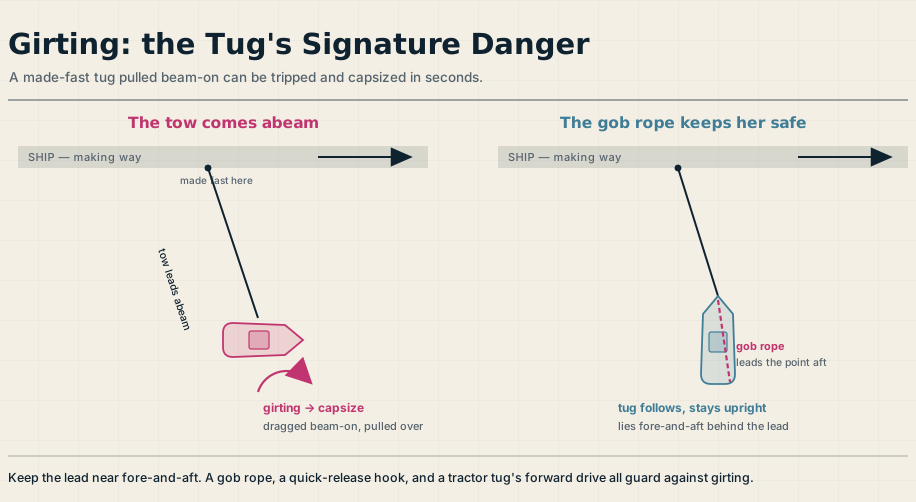
The defenses against girting are built into both equipment and seamanship. A gob rope, or gog rope, leads the towline down and aft to a fairlead near the tug’s stern, keeping the lead close to fore-and-aft so the tug streams safely behind the pull instead of being caught across it. A quick-release towing hook or winch lets the tug shed the load instantly if it all goes wrong.
Tractor tugs, with their propulsion forward of the tow point, resist girting by design. And the ship helps by keeping her speed down, because the faster she moves, the more savagely a made-fast tug can be tripped. The pilot who keeps the ship’s way off and the tug master who watches the lead of his line are guarding against the same thing.
Working the Tugs: Communication and Control
All of this depends on disciplined communication. The pilot, or the master, directs the tugs, usually over a dedicated VHF working channel and sometimes by whistle signals, in a clipped, standard language: make fast forward, push half, pull full, stop pushing, let go and fall back. The orders have to be unambiguous, because a tug crew is working within meters of a moving steel cliff and its propellers, with lines under killing tension, and a misheard instruction has no margin.
The good tug master does more than obey: he understands the intent behind the order and watches his own vessel’s safety, and the best port moves happen when the bridge team and the tug crews share one picture of what the ship is meant to do. It is the same close, called coordination that underlies safe berthing and unberthing and the wider craft of ship handling.
Why Tugs Are Not Optional
It is tempting to see tugs as helpers a powerful modern ship could do without, and that gets it backward. The ship’s own thrusters are limited in power and useless at any speed; her inertia and windage are enormous; her room to maneuver in port is measured in meters. Tugs supply the controllable force that bridges all of that, and they are the standby rescue when steering or engines fail at the worst moment. They reduce collisions, protect the berth and the harbor, hold ships off in the wind, and bring disabled vessels home. The quiet confidence a master feels with a tug fast and ready is not sentiment; it is the knowledge that the one thing his ship cannot do for herself is now covered.
Frequently Asked Questions
These are the questions people ask most about how tugboats assist ships, from what makes a tug strong to the danger its crew faces. Here are the short answers.
What is bollard pull?
Bollard pull is the steady pulling force a tug can exert measured at zero speed, quoted in tonnes. It is the standard measure of a tug’s strength, more meaningful than engine horsepower, and ports use it to specify how much tug power a ship of a given size must take. Harbor tugs typically offer tens of tonnes; large escort tugs ninety tonnes or more.
What is the difference between a tractor tug and an ASD tug?
Both use steerable propulsion, but a tractor tug carries its drive forward, under the hull ahead of the towing point, while an azimuth stern drive (ASD) tug has its two steerable pods at the stern. Placing the propulsion forward makes tractor tugs very responsive and much safer against girting, which is why they are favored for escort work.
What is girting and why is it dangerous?
Girting, also called girding or tripping, is when a tug made fast to a ship making way is dragged beam-on to its own towline. The line then leads abeam and the pull heels the tug, and if she cannot swing to follow it she can capsize, sometimes within seconds. It is the defining hazard of tug work.
How do tugs avoid being capsized?
Through a gob rope that leads the towline aft to keep the lead near fore-and-aft, a quick-release towing hook or winch to shed the load instantly, and tug designs (tractor tugs) with propulsion forward of the tow point. The ship also helps by keeping her speed down, since a faster ship trips a made-fast tug more violently.
How does a tug help a ship that has lost engines or steering?
A tug can take a disabled ship under tow or push it bodily, controlling its movement against wind and current when the ship cannot. An escort tug made fast aft is stationed precisely for this, and at speed it can apply steering and braking forces several times its bollard pull by sheering across the flow, a technique called indirect towing.