Maneuvering a Ship in Heavy Seas: The Hidden Dangers
Heading and speed are the only two levers you have in a storm. Used well, they keep your ship clear of the resonance and broaching that capsize vessels and part lashings.
The dangerous sea is not always the one that looks dangerous. A ship butting into head seas, pitching and throwing spray over the bow, is uncomfortable and slow, but the motion is honest. You can see what the sea is doing and ease the ship through it. The seas that capsize ships and part lashings are often the ones that look manageable: a long following swell, a steady roll, right up until the ship’s motion locks into step with the waves and builds into something violent in a handful of cycles. Heavy-weather handling is mostly the discipline of recognizing those traps before you are caught in them, and using the only two levers you really have, heading and speed, to stay clear.
This is a craft refined over many watches, but it is not mystical, and it is not guesswork. The phenomena that hurt ships in heavy weather are named, understood, and written into guidance every master is expected to know. Learn what they are and how they arise, and the storm stops being a wall of noise and becomes a set of conditions you can read and act on.
What the Sea Actually Does to a Ship
A ship in a seaway moves in six ways at once, but three matter most in heavy weather: it rolls side to side, pitches bow to stern, and yaws off its heading. What turns ordinary motion into danger is not the size of any single wave but timing. Every ship has a natural roll period, the time it takes to roll once from upright to one side, back through upright to the other, and home again. You can estimate it simply by timing the ship’s rolls in calm water. The sea, meanwhile, presents the ship with waves at its own rhythm, modified by the ship’s speed and the angle at which it meets them. That modified rhythm is the encounter period: how often the ship actually meets a wave crest.
Trouble begins when those two rhythms align. The encounter period is something you control, because it changes with heading and speed, while the natural roll period is largely fixed by the ship and its loading. Almost everything that follows is a consequence of that single relationship, and almost every remedy comes down to changing your encounter with the sea so it no longer reinforces the ship’s own motion. The dimension that decides which dangers apply is the length of the waves compared with the length of your ship, so a wave train that is harmless to a large vessel can be acutely dangerous to a smaller one in the same water.
The Phenomena That Endanger Ships
The IMO sets out these dangers in its guidance to masters for avoiding dangerous situations in adverse weather, MSC.1/Circ.1228, and every deck officer should know them by name rather than by feel alone. They become relevant when waves grow long and high relative to the ship, roughly when the wavelength exceeds about 0.8 of the ship’s length and the significant wave height exceeds about 0.04 of it. Below that the sea is uncomfortable; above it, the following list is in play.
Synchronous rolling is the simplest. When the encounter period nearly matches the ship’s natural roll period, each wave arrives in time to push the roll a little further, the way you build a child’s swing with small timed pushes. The roll grows with each cycle and can reach dangerous angles, and it is worst in beam seas, where the wave force acts most directly on the side of the hull.
Parametric rolling is subtler and more feared, because it can appear out of an apparently moderate head or following sea with no warning roll to telegraph it. It arises when the encounter period is about half the natural roll period, so the ship meets two waves in the time it takes to roll once. As a crest passes along the hull, the ship’s stability changes: a crest amidships makes the ship momentarily less stable, a trough amidships more so. That rhythmic change in stability, timed at twice the roll, pumps energy into the roll and can build it from nothing to thirty or forty degrees in only a few cycles. Fine-bowed ships with large flare and wide flat sterns, container ships above all, are the most vulnerable, and parametric roll has thrown stacks of containers over the side from ships that felt under control moments earlier.
In following and quartering seas a different family of dangers appears. Surf-riding happens when the ship is overtaken by a steep wave and carried along on its forefront, accelerated to the wave’s own speed. Once that grip takes hold the rudder loses authority, and the ship can slew uncontrollably beam-on to the sea. That violent broadside turn is broaching-to, and the heel that comes with it has capsized ships. The remedy is built into the cause: surf-riding needs speed, so it is avoided by keeping the ship’s speed and heading out of the dangerous zone the guidance defines, which in practice means not running fast in large following or quartering seas.
The last is the reduction of stability on the wave crest. When a wave as long as the ship sits with its crest amidships, the hull’s effective waterplane shrinks and the righting arm falls. In following and quartering seas the ship travels with the waves and so lingers on each crest, prolonging that weakened condition. Combined with a roll, or with the loss of steerage from a following sea, it can lead to a capsize that the static stability book would never predict. Pitching and slamming add to all of this, with bow-flare slamming and green water coming aboard in head seas, and pooping, where a following sea boards over the stern, in the other direction.
Choosing a Heading
Your heading relative to the sea is the first and biggest decision, and it is really a choice about which of the above dangers you are willing to manage. The diagram below maps the trade across the sectors.
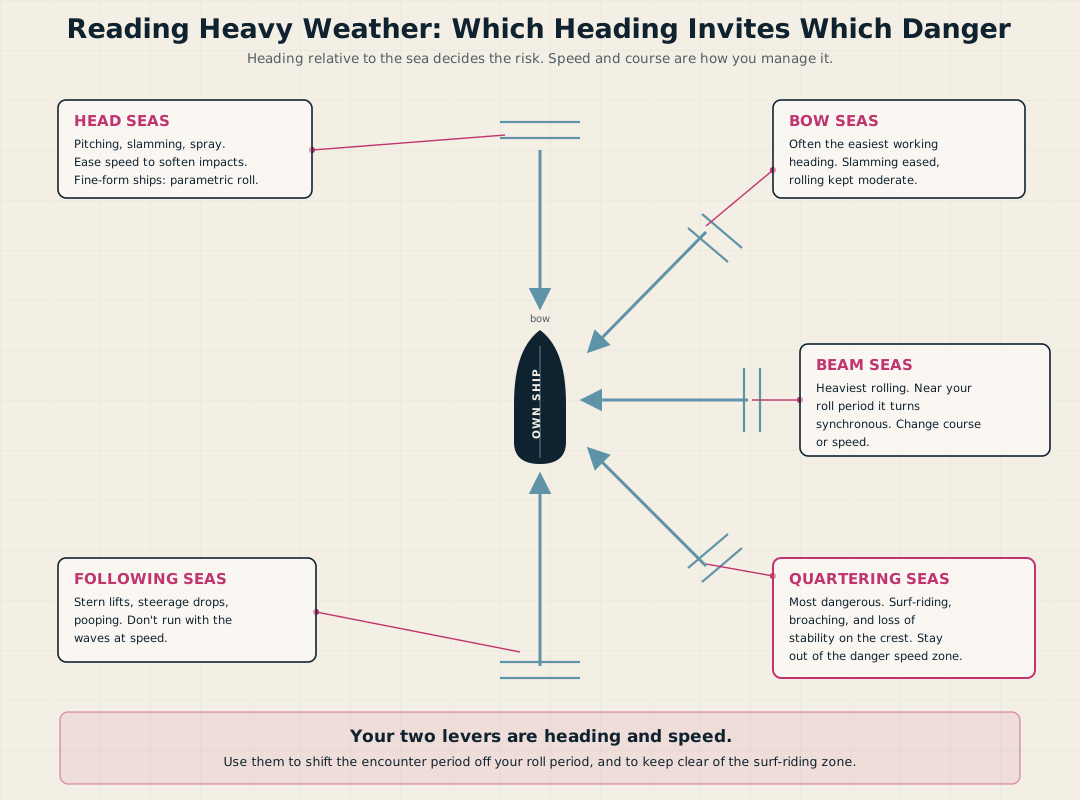
Head seas reduce rolling but increase pitching, and force the bow to do the work, with slamming and spray that punish a light ship and tire a heavy one. Bow seas, taking the waves a little off the bow, are often the most comfortable and seamanlike compromise, easing the slam while keeping rolling moderate. Beam seas, with the waves on the side, are where synchronous rolling lives, and a long spell beam-on to a sea near your roll period is to be avoided. The following and quartering sectors are the most dangerous of all, because they hold surf-riding, broaching, and stability loss on the crest together, and they do it while the ship’s reduced speed of encounter prolongs every risk. There is no single correct heading. There is only the heading that, for your ship and loading, keeps you clear of resonance and out of the broaching zone, and finding it is the heart of the craft.
Using Speed
Speed is the second lever, and it is more powerful than it looks because it changes the encounter period directly. Slowing down lengthens the time between wave encounters and shifts the ship out of a resonant roll, and it softens the impact of slamming by taking the force out of each meeting with a wave. Experienced masters slow early, before the motion turns violent, rather than driving on and paying for it in damage. The limit on slowing is steerageway: the ship must keep enough way on to answer the helm, because a vessel that loses steerage in a heavy sea falls into the trough beam-on, which is exactly where you do not want to be.
In following seas, speed cuts the other way, and the instinct to keep moving has to be checked against the surf-riding zone. Running too fast in a large following sea is what feeds surf-riding and broaching, so here the discipline is often to slow down and let the seas pass beneath you rather than ride with them. Whichever way you adjust, do it smoothly. Abrupt rudder and engine movements in heavy weather load the hull and machinery hard and can themselves trigger the loss of control you are trying to avoid.
Preparing the Ship Before It Hits
Most heavy-weather damage is decided before the worst of the weather arrives, in how well the ship was made ready. Securing for sea is not housekeeping: an unsecured drum, a slack lashing, or a half-full tank becomes a weapon once the ship begins to work. Free surface in slack tanks erodes stability at the very moment you need it most, so tanks are pressed up or run dry and the ship’s stability margin, its GM and righting energy, is checked against the conditions expected. A very stiff ship with a large GM rolls quickly and hard, snapping cargo and rigging; a tender ship with a small GM rolls slowly and far, and sits closer to synchronous trouble. Neither extreme is comfortable in a storm, and the loading that produces a moderate, easy roll is part of preparing well.
Beyond stability, watertight integrity is what keeps a bad day from becoming a lost ship. Watertight doors and openings are closed, ventilators trimmed or shut, scuppers and freeing ports kept clear so boarding water drains away rather than building on deck, and cargo lashings inspected and re-inspected, because a sea that shifts cargo can put a ship beyond saving in minutes. Much of this belongs to ordinary good seamanship carried out before sailing, and the best defense of all is not meeting the worst of the weather at all, which is why heavy-weather routing belongs in the passage plan from the appraisal stage onward.
Knowing When to Stop Fighting
There is a point where the right maneuver is to stop trying to make progress and simply keep the ship safe. Heaving to, holding the bow up to the sea at minimal headway, reduces motion and stress and lets a ship ride out conditions that would damage her if driven. Some ships do better lying a few points off the sea, others running slowly before it with care taken against the following-sea dangers, and which works depends on the hull and the loading. Seeking shelter under a coast or into a protected anchorage is not a defeat when the sea exceeds what the ship can safely take. In a tropical revolving storm the priority shifts again to avoidance, keeping clear of the storm’s track and out of its dangerous semicircle entirely. The judgment to ease off, to accept lost time in exchange for a ship and crew that arrive intact, is itself a mark of good watchkeeping and command.
Where the Rules Are Heading
For most of maritime history these phenomena were known mainly through hard experience. That is changing. In December 2020 the IMO approved interim guidelines on the Second Generation Intact Stability Criteria, which assess a ship against five modes of dynamic stability failure: the dead ship condition, excessive accelerations, pure loss of stability, parametric rolling, and surf-riding and broaching. The same dangers a master reads from the sea are now being written into how ships are designed and how their operating limits are set, with vulnerable ships carrying tailored operational guidance for the conditions they must avoid. The instinct built watch by watch is being met halfway by physics-based criteria, but neither replaces the other. The criteria tell a ship where its limits lie; the officer on watch still has to recognize the sea that is approaching one and act before it arrives.
Frequently Asked Questions
What is the most dangerous heading in heavy seas? Following and quartering seas are generally the most dangerous, because they combine surf-riding, broaching-to, and reduction of stability on the wave crest, and the ship’s low speed of encounter prolongs each risk. Beam seas are dangerous in a different way, since they produce the heaviest synchronous rolling. There is no universally safe heading; the right one depends on your ship, its loading, and the wave conditions, and the goal is to avoid both resonant rolling and the broaching zone.
What is the difference between synchronous and parametric rolling? Synchronous rolling occurs when the wave encounter period nearly equals the ship’s natural roll period, so each wave reinforces the roll, and it is worst in beam seas. Parametric rolling occurs when the encounter period is about half the natural roll period, so a rhythmic change in stability as crests pass along the hull pumps the roll up, often suddenly, in head or following seas. Parametric roll is especially associated with fine-form ships with large bow flare and wide sterns, such as container ships.
Why slow down in heavy weather instead of powering through? Reducing speed lengthens the encounter period, which can move the ship out of a resonant roll, and it softens slamming by taking force out of each impact with a wave. Masters slow early to protect the hull, machinery, cargo, and crew. The limit is steerageway: the ship must keep enough speed to answer the helm and avoid falling beam-on into the trough.
What is broaching-to? Broaching-to is a sudden, uncontrollable turn beam-on to the sea, usually following surf-riding in large following or quartering seas, when a steep wave carries the ship along on its forefront and the rudder loses authority. The heavy heel that accompanies a broach has capsized vessels. It is avoided by keeping speed and heading out of the dangerous zone, which in practice means not running fast in heavy following seas.
What IMO guidance covers maneuvering in heavy weather? The core reference is MSC.1/Circ.1228, the revised guidance to the master for avoiding dangerous situations in adverse weather and sea conditions, which describes the dangerous phenomena and how to avoid them with heading and speed. More recently, the interim guidelines on the Second Generation Intact Stability Criteria (2020) assess ships against five dynamic stability failure modes, formalizing the same phenomena into design and operational criteria.