Man Overboard Response Procedure
When someone goes over the side the ship cannot stop quickly. Knowing the turns, the cold-water clock, and how to recover a casualty safely saves the life.
Two words turn a quiet bridge into a fight against the clock: “Man overboard.” From the instant they are shouted, a life is measured in seconds, and the ship is working against itself. A loaded vessel moving at sea carries enormous momentum, and it cannot stop, turn, or come back the way a car can. By the time the engines answer, the person is already hundreds of meters astern, low in the water, and getting harder to see with every swell.
Everything that follows, the shouting, the throwing, the turn, the recovery, exists to close that gap before the sea does its work. This is why crews drill it until it is reflex, because the day it happens for real, there is no time to think it through.
The First Seconds: Shout, Point, Throw, Mark
The response begins with whoever sees or hears the fall, and their first job is not to run for help but to keep the casualty alive in everyone’s field of view. They shout it loud and clear, naming the side: “Man overboard, starboard side.” Then they point, and they keep pointing, arm locked toward the person in the water. That outstretched arm is not a gesture. In a running sea a head disappears between waves within seconds, and the pointer becomes the one fixed reference the bridge and the recovery team can steer by. Ideally that person does nothing else and becomes the dedicated lookout, eyes never leaving the water.
At almost the same moment, the nearest crew member throws a man overboard lifebuoy, the one fitted with a self-igniting light and an orange smoke float. It does two things at once: it gives the casualty something buoyant to reach for, and it marks the spot so the position is not lost the instant the ship moves on. On the bridge, the watchkeeper presses the MOB button on the GPS, freezing the latitude and longitude of the incident, and the recognized signal is made, the flag “O” by day and the prescribed sound and light signals, so any vessel nearby understands what is unfolding.
On the Bridge: Alarm, Position, and the Turn
When the alarm reaches the bridge, the officer of the watch takes hold of the situation in a fixed sequence. The helm comes off autopilot into hand steering, the engine room is told to stand by the main engine, the general alarm is sounded to bring the crew to their emergency stations, and the master is informed and normally takes command. The marked position is logged, the lookout is confirmed, and the rescue boat’s crew begins to prepare for a possible launch.
Then comes the decision that shapes the whole recovery: which way to turn the ship and bring her back. There are three classic maneuvers, and the right one depends on whether the casualty is still in sight, how long they have been in the water, and what the visibility is doing.
The Three Recovery Turns
Each turn is a way of solving the same problem, getting a large vessel back to a small point it has already passed, but they trade speed against reliability in different ways. The diagram below shows how each one tracks back toward the casualty.
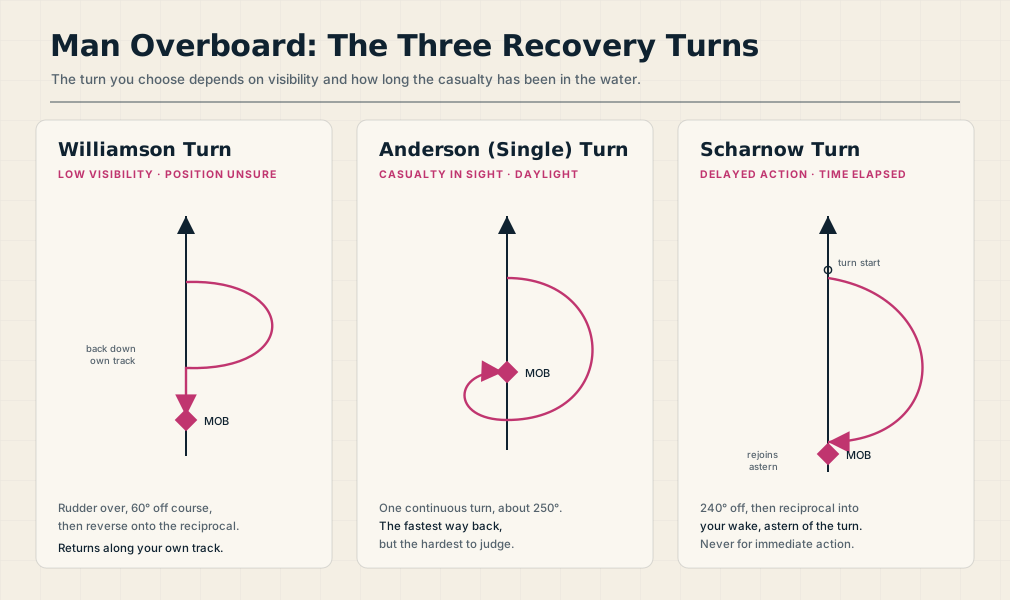
The Williamson turn is the all-rounder and the one most officers reach for when anything is uncertain. The rudder goes hard over toward the casualty’s side; at 60 degrees off the original course the rudder is reversed hard over the other way; and as the ship swings to 20 degrees short of the reciprocal heading, the rudder is centered and she steadies on the exact opposite course. Its great strength is that it brings the ship back onto her own original track, retracing the line the casualty fell from, which makes it the safest choice at night, in poor visibility, or when there is any doubt about exactly where the person went in. The cost is time: it carries the ship further away before it brings her back.
The Anderson turn, also called the single turn, is the fastest way back. The rudder goes hard over toward the casualty and stays there for one continuous turn of roughly 250 degrees before coming amidships, with the engines stopping the ship as the casualty comes about 15 degrees off the bow. It is the maneuver for clear daylight when the casualty stays in sight and the ship turns tightly, but it does not retrace the original track, so the final approach is the hardest of the three to judge.
The Scharnow turn saves distance over the Williamson but carries a sharp warning. The rudder goes hard over toward the casualty; after deviating 240 degrees from the original course the rudder is reversed; and at 20 degrees short of the reciprocal it is centered to settle the ship into her own wake, astern of where the turn began. Because it completes behind the turn’s starting point, it only works when time has already passed and the position is known, and it must never be used for immediate action, since it would leave the very stretch of water where the casualty fell unsearched.
The Clock You Are Racing: Cold Water
The turn buys minutes, but in cold water minutes are exactly what the casualty does not have, and understanding why changes how urgently the whole crew moves. A useful rough framing is the 1-10-1 idea: about one minute, ten minutes, then one hour, though these are approximate and shorten dramatically as the water gets colder.
The first minute is the most dangerous and the most misunderstood. Sudden immersion triggers the cold shock response, an involuntary gasp followed by rapid, uncontrollable breathing, and that gasp is the moment many people drown, before hypothermia is even a factor. This is the entire argument for a lifejacket worn and working: it keeps the airway clear through that first chaotic minute when the body will not obey. It is also why the condition of survival equipment matters long before an emergency, the reason a serviced, in-date lifejacket is worth the inspection routine behind it.
Over roughly the next ten minutes comes cold incapacitation: the hands and limbs stop working, fine motor control goes first, and the casualty loses the ability to swim or even grip a line thrown to them. Hypothermia, the slow fall in core temperature, is the longer danger that follows.
The lesson for the bridge is blunt: a casualty who could catch a heaving line in the first minutes may be unable to lift an arm by the time the ship returns, so the recovery has to assume they cannot help themselves at all.
The Approach: Bringing the Ship Back Safely
As the ship closes the position, speed comes off early and the approach is planned so the casualty ends up on the side that gives shelter, with the ship stopped well clear of running them down or drawing them into the propellers.
The standard is to bring the vessel upwind of the person and let her drift down toward them, or to work the rescue boat in from downwind, so that wind and sea push the boat toward the casualty rather than over them. If a rescue boat cannot be launched safely in the conditions, the crew works from the ship itself, passing buoyant lines and floating appliances on lines to draw the person alongside a low point in the hull.
Recovery: Why Horizontal Matters
Here is the part of the procedure most often done wrong, and it is the part that can turn a successful rescue into a fatality. A casualty who has been in cold water must be recovered and held as horizontal as possible, and handled gently throughout.
In the water, pressure helps support the circulation. Lifting someone vertically, hauling them up a ladder or hoisting them upright, removes that support at the same moment a cold, stressed heart is most vulnerable, and the result can be a sudden cardiovascular collapse, sometimes called post-rescue or circum-rescue collapse, that ranges from fainting to cardiac arrest. This is why a tired, cold casualty should not simply be asked to climb a pilot ladder, and why horizontal recovery devices, a rescue sling rigged to lift them flat, a Jason’s cradle, or a net, are so much safer than a vertical climb. The casualty comes out of the water lying down and stays lying down.
Once on deck the emergency is not over. Trained crew check breathing, pulse, and responsiveness; wet clothing is removed gently and the casualty is insulated and rewarmed gradually, because rapid rewarming can itself trigger dangerous heart rhythms. If there is no pulse, CPR is started and continued, and rescuers do not assume death from cold alone, a deeply hypothermic heart can recover with rewarming long after it would seem hopeless. Throughout, the master can call for medical guidance by radio or telemedicine, and the casualty’s condition is reassessed continuously.
If Contact Is Lost: The Search
If the casualty is not found on the first approach, the emergency becomes a search, and the methodical replaces the immediate. The bridge sets a search pattern suited to the situation, an expanding square around a known datum or a sector search where drift is uncertain, and works it deliberately rather than circling at random. The smoke float and the lifebuoy’s light become the markers to hunt for, and at night searchlights sweep the surface. The position already saved on the GPS anchors the whole effort.
This is also the point to widen the net. A distress or urgency call brings in nearby vessels and alerts the relevant rescue coordination center, because the open sea runs on mutual aid, and a ship that helps today may need the same help tomorrow. A man overboard is one of several emergencies where that wider safety net matters, and it sits alongside the rest of the discipline covered across the safety and survival reference.
Frequently Asked Questions
These are the questions crews ask most when they work through a man overboard plan, from cadets learning the turns for the first time to officers confirming the recovery details. Here are the short answers.
What is the first thing to do when someone falls overboard?
Shout it loud with the side (“Man overboard, port side”), point continuously at the person and keep pointing, and throw the man overboard lifebuoy with its light and smoke float. At the same time the bridge presses the GPS MOB button to mark the position and sounds the general alarm.
Which man overboard turn is best?
There is no single best turn; it depends on the situation. The Williamson turn is the safest general choice and works in poor visibility because it returns the ship along her own track. The Anderson single turn is fastest when the casualty stays in sight in daylight. The Scharnow turn is used only for delayed action when time has already passed.
Why does cold water make a man overboard so dangerous?
The first minute brings the cold shock response, an involuntary gasp and loss of breathing control that can cause drowning before hypothermia matters, which is why a lifejacket is critical. Within about ten minutes the limbs stop working, so the casualty often cannot swim or grab a line, and the recovery must assume they cannot help themselves.
Why must a casualty be recovered horizontally?
Cold water immersion makes the heart vulnerable, and lifting someone vertically removes the support the water gave their circulation. That sudden change can cause a collapse or cardiac arrest around the time of rescue. Recovering the casualty flat, with a sling, cradle, or net, and keeping them horizontal greatly reduces that risk.
How long can a person survive in the water?
It varies enormously with water temperature, clothing, and whether a lifejacket is worn. In very cold water, incapacitation can come within minutes and survival time is short; in warmer water a person may last far longer. Because the limits are unpredictable, the response is always treated as immediate and time-critical.