Hot Work Safety
Welding and cutting cause some of the worst fires at sea. Here is how the permit, gas tests, and fire watch keep a single spark from taking the ship.
A welder watches the spark in front of him. The fire that kills the ship usually starts somewhere else: a bead of slag that fell through a gap in the deck plating an hour ago, or a patch of paint smoldering on the far side of a bulkhead because the steel carried the heat fifteen feet from the torch.
Hot work is one of the leading causes of serious fires and fatalities at sea, and almost none of those fires start where anyone was looking. That is the whole problem in a sentence, and everything in a good hot work procedure exists to solve it.
Why Hot Work Is the Job That Kills Ships
Hot work is any task that produces heat, sparks, or an open flame: welding, gas cutting, burning, brazing, grinding, even chipping near flammable material. Every one of these is dangerous ashore, but a ship turns the danger up. The structure is steel, which conducts heat efficiently from one compartment into the next. Spaces are confined and stacked tight.
Fuel, oil, paint, residues, and old coatings sit behind almost every door, and vapors from a tank that was “cleaned” weeks ago can still be waiting in a bilge or a void. On top of all that, there is no fire brigade to call. If hot work starts a fire, the same people holding the torch are the ones who have to put it out.
So seafarers treat hot work with a seriousness that can look excessive to an outsider. It is not. The discipline around a five-minute weld is the same discipline that keeps a small mistake from becoming the kind of fire covered in the wider firefighting reference. The ocean does not offer second attempts once flames take hold below deck.
First, Ask Whether It Needs to Happen at All
The safest hot work is the hot work you never do, and the first real control is to challenge the job itself. Can the task be done with cold work instead, using mechanical cutting, bolting, or cold-applied repairs? Can the component be removed and taken to a dedicated workshop or done ashore, away from fuel and confined spaces? Eliminating the heat source entirely beats every downstream precaution, every time.
Only when hot work is genuinely unavoidable does the question shift from whether to how. And once it does, the controls that follow are not a menu to pick from. They work as a chain, and a chain protects nothing if one link is missing.
The Permit to Work: A Contract, Not a Signature
No hot work begins without a completed and approved permit to work. The permit defines the exact task and location, the hazards identified, the precautions required, the physical boundaries of the work, who is responsible for what, and how long the authorization lasts. It is authorized by a senior officer, the master or the relevant department head, because the decision to introduce a flame into the ship is not one to be made at deckplate level alone.
The point of the permit is not the signature at the bottom. It is the conversation the signature represents: officers and crew sitting down together, walking the controls one by one, and agreeing that the job can be done safely before anyone strikes an arc. When hot work also means entering a tank or void, the permit is issued alongside an enclosed space entry permit, never instead of it.
Testing the Air, and Testing It Again
Before a flame appears, the atmosphere is tested with a calibrated gas detector, and the numbers are not negotiable. The space must hold a normal oxygen level, between roughly 19.5 and 22 percent; an oxygen-enriched atmosphere is its own hazard, because excess oxygen widens the range over which materials will burn. Flammable vapor must read safely below its lower explosive limit, with the common benchmark being under 10 percent of the LEL, and hot work near cargo demanding far stricter, effectively gas-free conditions. Toxic gases such as hydrogen sulfide, carbon monoxide, and benzene must sit below their exposure limits.
Crucially, the test does not stop at the work site. Vapors travel and settle, so the readings extend into adjacent compartments, ducting, bilges, voids, and the space directly below. And testing is not a one-time gate. Conditions shift the moment work or ventilation begins, so the atmosphere is re-checked continuously or at set intervals throughout the job. On tankers, this is formalized in a “safe for hot work” or gas-free certificate issued by a competent person, often a marine chemist, after the cargo system has been cleaned, isolated, and proven.
Securing the Area: The Danger Travels
With the air confirmed, the area itself is made safe, and this is where the hard-won lesson about hot work lives. The hazard is never confined to the work point.
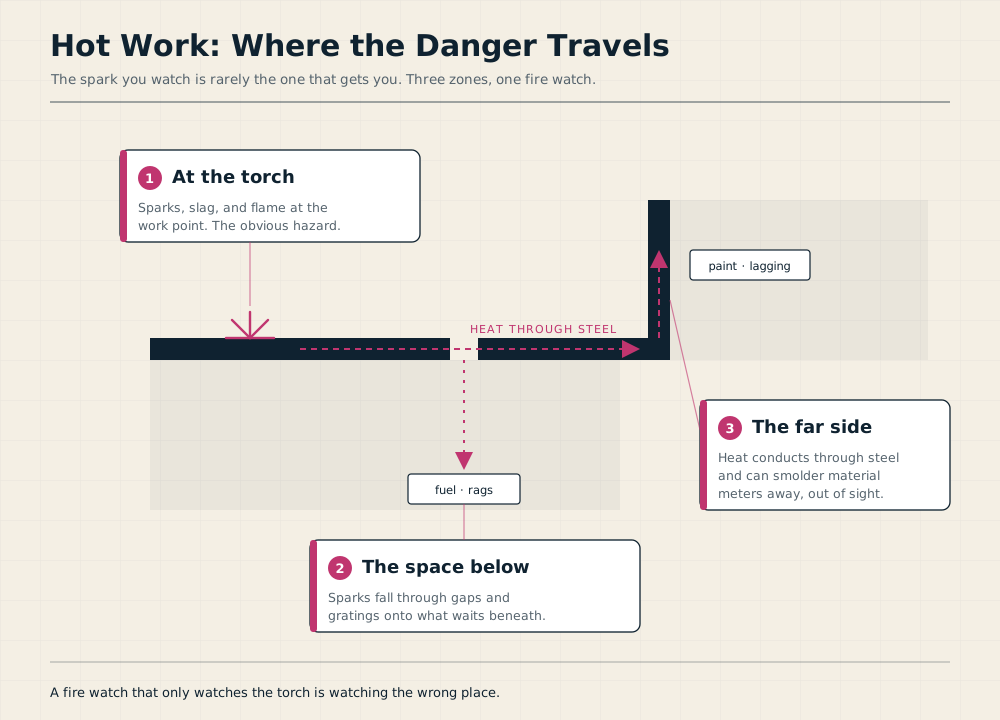
Combustibles in the immediate area, rags, paper, oily residues, loose coatings, are removed or covered with fire-resistant blankets. Fuel lines and electrical supplies serving the area are isolated. Then the crew looks where the welder cannot: at the gaps in the deck plating where slag will fall into the compartment beneath, and along the steel framing that will carry heat to the far side of a bulkhead and ignite paint or insulation no one can see.
Guards, mats, and barriers go in below and around the work. Ventilation is balanced with care, enough airflow to stop vapor accumulating and to protect the welder from fumes, but not so much that it fans sparks into places they should never reach.
The Fire Watch: The Most Important Person in the Compartment
Every hot work job carries a dedicated fire watch, and it is not a job done with one eye while holding a tool in the other hand. The fire watch does nothing else. They stand with a charged extinguisher or hose ready, and their attention covers the three zones the diagram shows: the work itself, the space below where sparks fall, and the surrounding structure where heat travels. They check overhead beams, the undersides of gratings, and the far faces of bulkheads, the hidden places where a spark can sit and smolder unnoticed.
The fire watch also holds something more than a hose: the authority to stop the job. If the gas readings drift, if smoke appears where it should not, if ventilation falters, or if the situation simply feels wrong, work halts at once and does not resume until conditions are confirmed safe and the permit is reauthorized. No minutes saved are worth pressing on through uncertainty.
After the Torch Goes Out: The Risk That Lingers
The most dangerous moment in hot work is often after the tools are switched off. Smoldering material, concealed sparks, and slowly heating steel can take hold long after the welder has packed up and the compartment looks finished. A fire that started during the job may not show itself for an hour or more.
For that reason the fire watch stays on station after completion, for a set period that depends on the location and complexity of the work and is often measured in hours, not minutes. They make repeated checks of the spaces below and adjacent, feeling for heat in the structure and watching for the first wisp of smoke. Only when that watch has passed without incident does the supervising officer close the permit, the formal confirmation that the area is genuinely safe and that normal operations can resume.
Hot Work in an Enclosed Space: Two Killers at Once
When hot work happens inside a tank, cofferdam, or void, it combines two of the deadliest activities aboard a ship into a single operation, and the controls tighten accordingly. The hot work permit is issued together with an enclosed space entry permit, and the atmosphere is tested far more often because a confined space can trap gas, smoke, and heat with no warning.
A trained attendant is stationed at the entrance throughout, tracking everyone inside, maintaining communication, and keeping rescue equipment ready, because they are the lifeline for the people working within. Ventilation is managed tightly, permit durations are kept conservative, and additional fire watch cover is provided. The reason for all of it is simple: in an enclosed space, the crew is its own rescue team as well as its own fire brigade, and there is very little margin for getting either wrong.
Frequently Asked Questions
These are the questions that come up most often when crews work through a hot work plan, from cadets meeting the permit system for the first time to officers confirming the limits. Here are the short answers.
What counts as hot work on a ship?
Hot work is any task that produces heat, sparks, or an open flame: welding, gas or arc cutting, burning, brazing, grinding, and similar operations, as well as chipping or other work near flammable material. If it can create an ignition source, it is treated as hot work and needs a permit.
What atmosphere is considered safe for hot work?
As a general marine standard, oxygen should read between about 19.5 and 22 percent, flammable vapor should be well below its lower explosive limit, commonly under 10 percent of the LEL, and toxic gases should be below their exposure limits. Near cargo, the space is normally required to be effectively gas-free. The atmosphere is tested before work and repeatedly during it.
How long must the fire watch continue after hot work finishes?
The fire watch remains in place after the work is done for a period set by the location and complexity of the job, often a matter of hours rather than minutes, because smoldering and concealed heat can ignite well after the tools are switched off. Only after that watch passes safely does the supervising officer close the permit.
Who can authorize a hot work permit?
A senior officer authorizes the permit, the master or the responsible department head, not the person doing the work. The permit reflects a shared review of the task and its controls, and on tankers it is supported by a gas-free or “safe for hot work” certificate issued by a competent person.
Why is hot work in an enclosed space so dangerous?
It combines two of the highest-risk shipboard activities. The confined atmosphere can trap gas, smoke, and heat and change quickly, so it demands a separate enclosed space entry permit, frequent atmospheric testing, a dedicated attendant at the entrance, ready rescue arrangements, and conservative permit durations.