Anchoring Procedures
Holding a ship in place is more than dropping a weight. How crews choose the ground, lay out enough cable, set the anchor, and keep watch against a drag.
A loaded ship of a hundred thousand tonnes is held against wind and tide by an anchor that weighs perhaps fifteen. Put like that, anchoring sounds impossible, and it would be if the anchor were doing the work by its weight alone. It is not. What holds the ship is the cable: its weight, the long flat angle it pulls at, and the way it lays the anchor’s flukes into the seabed so the bottom itself takes the strain.
Understand that one fact and anchoring stops being a matter of dropping something heavy and becomes what it really is, a piece of seamanship where the seabed, the chain, the weather, and the ship handling all have to come together. Get any one of them wrong and the ship will not stay where you put her.
Choosing the Anchorage
Long before the anchor moves, the work is in choosing where to let it go. A good anchorage has to satisfy several things at once, and the first is depth, sufficient at every state of tide, deep enough to float the ship at low water and shallow enough that you can lay a sensible length of cable. The second is holding ground, the nature of the seabed. Firm sand and stiff mud or clay give an anchor something to bite; rock, shingle, soft silt, and thick weed do not, and a chart that shows a foul or rocky bottom is a chart telling you to anchor elsewhere.
The third requirement is room. A ship at anchor does not sit still; she swings in an arc as the wind and tide change, and she needs a clear circle around her with no shoals, no banks, and no other vessels inside it. That circle is the swing circle, and its size is something you work out before you commit, because it decides whether the anchorage is safe at all. Shelter from the prevailing weather and a clear approach away from traffic complete the picture. Charted anchorages near ports already balance these factors, but a watch officer must still be able to judge a temporary anchorage on the same terms, a skill that sits at the heart of practical seamanship.
Scope: Why the Chain Does the Holding
The single most important number in anchoring is scope, the ratio of the length of cable paid out to the depth of water. It is scope, far more than the anchor itself, that determines whether the ship holds.
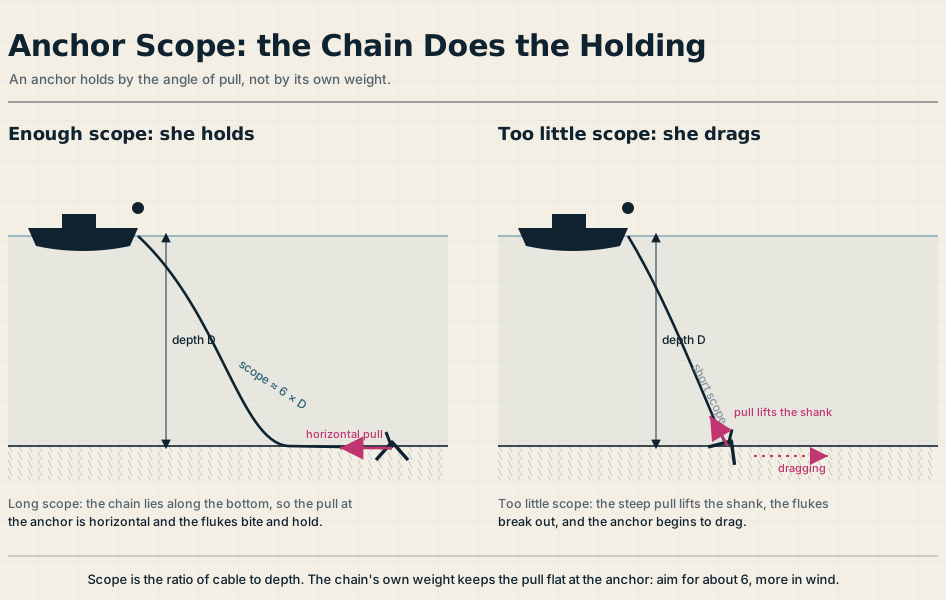
The reason lies in the angle of pull at the seabed. The cable is heavy, and its own weight makes it hang in a curve, a catenary, that sags down to the bottom and then runs along it to the anchor. Where the cable meets the anchor it is lying almost flat, so it pulls the shank horizontally, and a horizontal pull is exactly what drives the flukes deeper into the ground. Pay out too little cable and the chain runs straight and steep from the bow to the anchor, the pull at the shank tilts upward, and that upward pull lifts the flukes out of the seabed. The anchor then skips along the bottom rather than digging in, and the ship drags. More scope means a flatter angle, which means better holding, which is why the cable does the work the anchor gets the credit for.
In practice this turns into working numbers. Cable is measured in shackles, each one 27.5 meters long, and a large ship carries around twelve shackles on each anchor. A sound rule of thumb is to aim for a scope of about six, six times the depth in cable, increasing toward eight or ten when strong wind or current is expected. Other long-standing rules give the same answer a different way: the Admiralty formula puts the number of shackles at roughly one and a half times the square root of the depth in meters, while classification guidance suggests a cable length of six to ten times the depth. Whichever you use, the principle is constant, that calm weather and good holding allow less, while wind, sea, and a long stay demand more.
The Approach, and Letting Go
The approach is slow and deliberate, and it is made heading into the combined push of wind and tide so the ship can be stopped cleanly and will drift back to lay her cable in a straight line. Speed comes off early; a very large ship needs to be down to half a knot over the ground before the anchor goes, and one old test of being stopped is to run the engine astern until the propeller wash reaches the bridge. While the bridge handles the ship, the forecastle party readies the gear, clears the brake and stoppers, and stands by the windlass, with constant communication flowing between the two because each is half of the same operation.
There are two ways to put the anchor down, and choosing between them is a real decision. Letting go releases the anchor to fall under its own weight on the brake, which is quick and works well in moderate depths. Walking back lowers the anchor under power with the windlass in gear, which is slower but far more controlled. You walk back rather than let go in deep water, where a free fall would overrun the gear, when anchoring close to other ships or over submarine cables, and on large ships generally, where letting go risks the cable running away to the bitter end. A common method is to walk the anchor back to about half a shackle off the bottom, hold it on the brake, and then let go cleanly into position, easing the ship astern at around half a knot so the cable lays out along the seabed instead of piling on top of the anchor in a heap. As the cable runs, the forecastle counts and reports the shackles, and reports the direction the cable is leading, so the bridge can picture what is happening on the bottom it cannot see.
Brought Up: Confirming She Holds
Paying out the planned cable is not the same as holding, and the next job is to confirm the anchor has set. As the ship drifts back and the cable comes taut, the officer watches how it behaves. A cable that grows steady, takes a moderate strain, and then eases is a cable doing its job; one that comes up bar-taut and jerks, or vibrates and trembles, is warning of an anchor skating across the ground rather than biting. The master may give a gentle touch astern to test the hold, watching whether the cable holds firm or the ship keeps moving.
When the anchor has set, the ship is said to be brought up: she has stopped, swung head to wind or tide, and begun to ride steadily to her anchor with the cable leading well at a moderate stay. That is the moment anchoring is actually finished, and not before. By day a black ball is shown forward and by night the anchor lights are exhibited, the signals required under the rules of the road to tell other ships she is at anchor.
The Anchor Watch: Swing Circle and the First Signs of a Drag
A ship at anchor is never left to look after herself. The anchor watch keeps her under continuous supervision, and its foundation is the swing circle. Its radius is the length of cable paid out plus the length of the ship, so a vessel of eighty meters with five shackles down swings on a radius of roughly five times 27.5 meters plus eighty, about two hundred and twenty meters, and that circle is plotted on the chart from the position the anchor was let go, not from where she finally brought up. As long as every position fix falls inside the circle, she is holding.
Good anchor watch fixes the position often and by more than one method, working on a suitable chart scale and backing it with the anchor alarm on the radar or ECDIS where fitted, the kind of position monitoring that runs through all sound watchkeeping. Transit marks and clearing bearings on fixed objects ashore give an instant, instrument-free check, since a transit that opens up tells you at a glance the ship has moved. The classic signs that an anchor is dragging are worth knowing cold: the position creeping outside the swing circle, the ship ceasing her normal yawing and instead lying beam-on to wind and sea, and the cable coming up to a long, hard stay and snubbing. The watch also keeps an eye on the weather and keeps the engine at a state of readiness suited to the conditions, because the time to discover the main engine is needed is not the moment the ship is already moving toward a shoal.
When She Drags, and the Emergency Anchor
When an anchor drags, the response is prompt and ordered. The officer of the watch informs the master, brings the engine to immediate readiness, and prepares either to pay out more cable, which lowers the angle of pull and often re-sets the anchor, or to weigh and re-anchor, or to leave the anchorage altogether if the situation demands it. The picture is complicated by the fact that in bad weather several ships may be dragging at once, so the watch keeps track of the vessels around it as carefully as its own position. None of this is improvised on the night; it is anticipated, briefed, and ready.
The anchor has one further use that turns its physics on its head. In an emergency, a ship that has lost propulsion and is being set toward danger can use an anchor to slow or stop herself, and here you do not want it to bite hard. A sudden grip at speed would part the cable or tear the gear from the ship. Instead the anchor is walked back to drag along the bottom, its resistance bleeding off the ship’s way gradually. It is a last resort, and a hazardous one, because a cable running out under load is lethally dangerous; the forecastle party stands well clear of its path, trusting the gear, since the pin that secures the bitter end in the chain locker is designed to part under extreme load to save the ship’s structure, and a flailing cable end will kill.
Weighing Anchor and Securing
Leaving is the operation in reverse. The windlass heaves in the cable while the ship eases slowly ahead to take the weight off the gear, and the forecastle reports the cable’s stay as it comes, long stay shortening to short stay, then up and down when the cable leads vertically and the anchor is about to break out. A final heave lifts it clear, the ship is reported anchor aweigh, and the anchor ball comes down. As the anchor breaks the surface it is checked: clear, or fouled by its own cable or a picked-up wire, and the mud or sand clinging to the flukes is a last reading of the holding ground. Washed clean, hove home, and secured in the hawse with the brake set and the stoppers on, the anchor is made ready for sea and the ship resumes her passage.
Frequently Asked Questions
These are the questions cadets and watchkeepers ask most about anchoring, from how much cable to use to how to know the anchor is holding. Here are the short answers.
How much anchor cable should you pay out?
Aim for a scope of about six, meaning six times the depth in cable length, and increase toward eight or ten when strong wind or current is expected. Other common rules give the number of shackles as roughly one and a half times the square root of the depth in meters, or a cable length of six to ten times the depth. Calm weather and good holding allow less; wind, sea, and a long stay require more.
What is the difference between letting go and walking back?
Letting go drops the anchor under its own weight on the brake and is quick in moderate depths. Walking back lowers it under power with the windlass in gear, giving much more control. You walk back in deep water, near other ships or submarine cables, and on large ships, where letting go risks the cable running away uncontrolled.
What does it mean when a ship is brought up?
A ship is brought up when the anchor has set and she has stopped, swung head to wind or tide, and begun to ride steadily to her anchor with the cable leading at a moderate stay. It is the confirmation that the anchor is holding, and anchoring is not complete until it happens.
How do you know if the anchor is dragging?
The clearest sign is the position fix moving outside the plotted swing circle. Other signs are the ship losing her normal yawing motion and lying beam-on to the wind and sea, the cable coming up to a long, hard stay and snubbing, and transit marks ashore opening up. Any of these means the watch should act at once.
How is the swing circle calculated?
The swing circle radius is the length of cable paid out plus the length of the ship, and it is plotted from the position where the anchor was let go. A ship of eighty meters with five shackles, about 137 meters, of cable out swings on a radius of roughly 220 meters. Keeping every position fix inside that circle confirms she is holding.