Seafaring Phrases in Movies
Hollywood loves a sea command. A mariner sorts the famous lines into the ones still piped on a real bridge, the age-of-sail relics, and the pure invention.
Watch a sea film with a sailor in the room and you will see them flinch at some lines and nod at others, because they are hearing two languages at once. One is the genuine speech of a working ship, commands forged over centuries to carry meaning across a deck when the wind tore every other word away. The other is costume-shop language, words a screenwriter reached for because they sound briny, even though no one has ever piped them on a real bridge.
The fun of these phrases is not just where they came from but which is which, and a mariner can sort them at a glance. Some are still shouted in earnest today. Some are real but belong to the age of sail. And a few were never seafaring at all until Hollywood decided they should be.
Why the Movies Reach for the Sea
Filmmakers borrow nautical language because it does the work drama needs. A real sea command is built for urgency and clarity, stripped to the fewest words that cannot be misheard, which is exactly the rhythm a tense scene wants. The words also carry the weight of age, many of them older than the countries that now quote them, and the ear hears that history even when the mind cannot name it.
The trouble is that a phrase chosen for how it sounds is not always a phrase a sailor would use, and the gap between the two is where the costume drama shows. Sorted by a mariner, the famous lines fall into three plain groups.
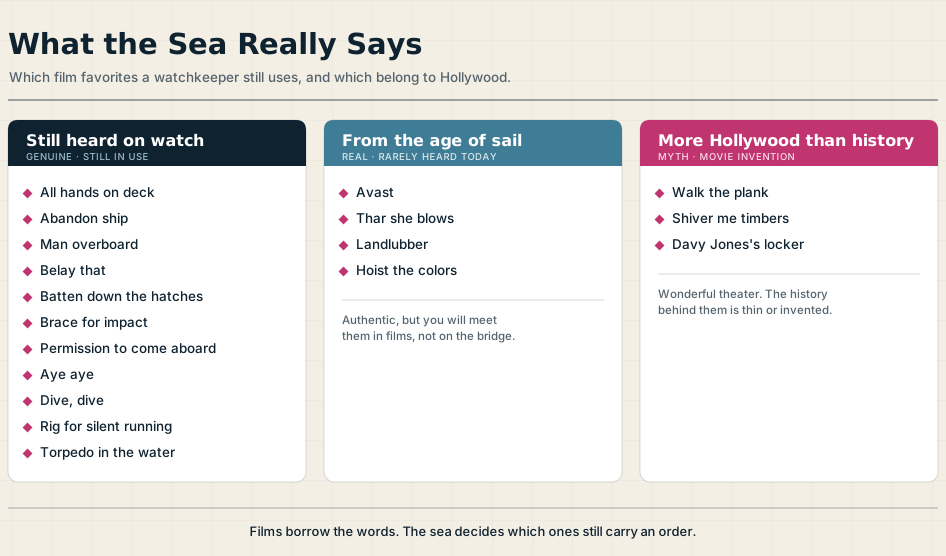
Still Heard on Watch: The Commands That Are Real
A surprising number of the lines the movies love are the genuine article, used today more or less as the films use them.
All Hands on Deck
It means exactly what it says: every member of the crew, every hand, to stations at once. The phrase carries the same weight on a modern ship as on a wooden one, and it is still called in earnest whenever a situation needs everyone.
Abandon Ship
The gravest order a master can give, and the films are right to treat it as the point of no return. The real thing, though, is the calm, drilled sequence set out in the abandon ship procedure, not the chaos the camera prefers.
Man Overboard
Shouted the instant someone goes over the side, and it sets off a genuine and urgent recovery. The films use it to launch a frantic scene; at sea it launches a practiced one.
Aye Aye
One of the few the movies get exactly right. It is a formal acknowledgment that an order has been understood and will be carried out, not merely a cheerful “yes,” and it remains in genuine use.
Belay That
A true sailor’s phrase. To belay is to make a line fast around a cleat or a pin, and from there it came to mean cancel or disregard the last order, which is just how an officer uses it.
Permission to Come Aboard
Genuine etiquette rather than invention: a request made to the officer on watch before stepping aboard a ship. The films borrow it intact.
Batten Down the Hatches
Real seamanship. Before heavy weather, the covers over a ship’s deck openings were secured with tarpaulins held down by wooden strips, the battens, so the sea could not flood the spaces below. The work is still done whenever a ship secures for heavy weather, even if the words are piped less theatrically than in the films.
Brace for Impact
Broader than the sea, but real at it: a warning to prepare for an unavoidable collision. Its plain clarity is why it crosses so easily from ships to aircraft to anywhere a crash is only moments away.
Dive, Dive
Genuine submarine procedure, klaxon and all. The repetition is not just for drama; it is the unambiguous order to take the boat down without delay.
Rig for Silent Running
A real order to minimize every noise aboard so the enemy’s sonar cannot find you. Silence becomes the defense, which is exactly why it builds such tension on screen.
Torpedo in the Water
A genuine warning of an immediate and mortal threat. Few naval lines signal danger as plainly, which is why even viewers who know nothing of submarines understand it at once.
We’re Taking on Water
Real, though the films treat it as instant doom. In practice a ship can take on water and survive, provided the rate stays within what her pumps and her stability can handle, which is the whole craft of flooding and damage control.
Real, but Hauled Down Long Ago
The next group is authentic but archaic, working language that now lives almost entirely on screen.
Avast
It genuinely meant stop, or hold fast, and is thought to come from the Dutch hou’ vast, hold fast. It was a real order once, but you will wait a long time to hear it on a modern bridge.
Thar She Blows
The whaling lookout’s cry on sighting the spout of a whale, real and urgent in its day, now stranded with the industry that coined it.
Landlubber
Genuine sailor’s slang, a lubber being a clumsy hand unused to the sea. Today it is delivered with a wink rather than with contempt.
Hoist the Colors
An odd case. Making the ship’s ensign is a real and living tradition, and warships still hold a daily ceremony of colors, but the sweeping battle-anthem the films built around the phrase is pure invention. The tradition is true; the drama around it is set dressing.
More Legend than Logbook
The last group is the one the movies invented or inflated, the lines most people assume are ancient lore and that turn out to be thin on history.
Walk the Plank
The signature pirate punishment on film, yet the documented history is sparse, only a handful of disputed accounts across the whole era of piracy, nothing like the routine spectacle the screen suggests. It survives because fiction, from Victorian adventure tales to Disney, found it irresistible, not because pirates relied on it.
Shiver Me Timbers
Literary rather than nautical, an oath popularized by sea fiction in which a sailor imagines the very timbers, the wooden frames of the ship, shuddering in shock. It was never an order anyone actually gave.
Davy Jones’s Locker
The most interesting of the three, because it is genuinely old. Sailors used it for the bottom of the sea, the grave of those lost overboard, before it appeared in print in the early eighteenth century, and it served a real purpose: a way to speak of death at sea without the bad luck of naming it directly. Who Davy Jones was, no one can pin down, with theories running from a corruption of the biblical Jonah to the Welsh Saint David to a sinister tavern keeper who drugged sailors into the press gang, and not one of them supported by hard evidence.
Why the Words Outlast the Ships
The phrases endure for two different reasons, and it is worth knowing which is which.
The genuine commands survive because they work: they were built to carry an order through chaos, and that hard, clear usefulness keeps them in service long after the wooden ships are gone.
The theatrical ones survive because the sea still grips the imagination, vast and dangerous and full of story, and audiences will always reach for words that sound like adventure.
Both keep a centuries-old vocabulary alive, which is no small thing. If a pirate film sends someone to the nearest glossary to find out what “belay” really means, the language has done exactly what it was built to do, carried meaning across a gap, this time a gap of hundreds of years.
Frequently Asked Questions
These are the questions people ask most about the sea phrases the movies made famous, from which are real to where the strangest of them came from. Here are the short answers.
Which movie sea phrases are actually used by real sailors?
Many are genuine and still in use, including all hands on deck, abandon ship, man overboard, belay that, aye aye, batten down the hatches, and permission to come aboard, along with submarine orders like dive, dive and rig for silent running. The films often exaggerate the drama around them, but the commands themselves are real.
Did pirates really make people walk the plank?
Far less than the movies suggest. Only a handful of disputed accounts exist across the whole era of piracy, nothing like the routine punishment film and fiction depict. Walking the plank survives as a cliché because storytellers loved it, not because it was common practice.
What does “batten down the hatches” really mean?
It describes a real piece of seamanship. Before heavy weather, the covers over a ship’s deck openings, the hatches, were secured with tarpaulins held down by wooden strips called battens, so the sea could not flood the spaces below. The phrase came ashore to mean preparing for any kind of trouble.
Where does “Davy Jones’s locker” come from?
It is a genuine old sailor’s term for the bottom of the sea as a grave, in use before it appeared in print in the early eighteenth century, and it let sailors speak of death at sea without naming it directly. Who Davy Jones was is disputed, with theories ranging from the biblical Jonah to a press-ganging tavern keeper, none of them proven.
What does “aye aye” actually mean?
It is a formal acknowledgment that an order has been understood and will be carried out, not simply a way of saying yes. It is one of the phrases the movies get right, and it remains in genuine use at sea.