Parts of a Ship: A Beginner’s Tour of the Vessel
Every part of a ship has a name that works on any vessel afloat. A plain-language tour from bow to stern, with diagrams, so you can find your way around with confidence.
The first time you board a working ship, it reads as a world of steel, noise, and motion. Passageways turn back on themselves, hatches open into spaces you cannot name, and the vessel feels far larger inside than it looked from the quay. Every seafarer remembers that first hour aboard, trying to work out where everything is and how it fits together.
Learning the parts of a ship is how that confusion turns into confidence. When an officer gives an instruction, when an alarm sounds, or when someone calls for help on deck, you need to know exactly where to go without thinking. This guide walks you from one end of a typical merchant vessel to the other, names what you are looking at, and gives you the language to move around her with purpose.
Which Way Is Which
Before you can find anything, you need the ship’s own sense of direction, and it does not change with the way you happen to be facing. The bow is always the front and the stern always the back. Facing forward, port is to your left and starboard to your right, and they stay port and starboard whichever way you turn. The middle of the ship is amidships, and anything toward the bow is forward while anything toward the stern is aft. Move toward the centerline and you are going inboard; move toward either side and you are going outboard.
Two of these are worth burning into memory on day one, because the whole rule of the road depends on them: port shows a red light and starboard a green one. The easy way to keep them straight is that port and left both have four letters. Get that wrong on a dark bridge and you have read the situation backward.
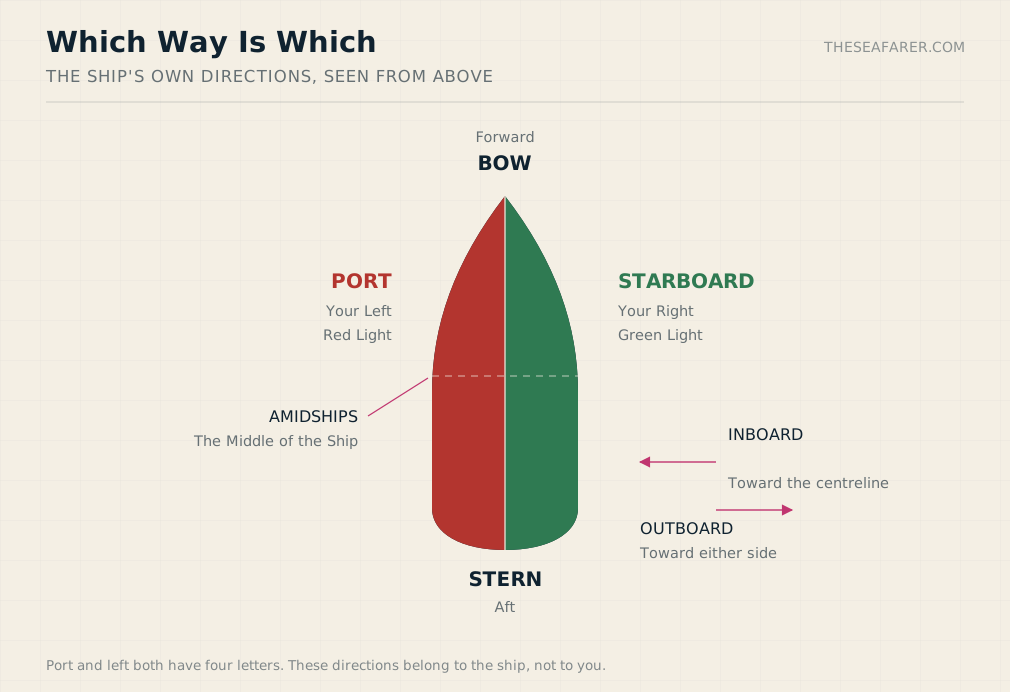
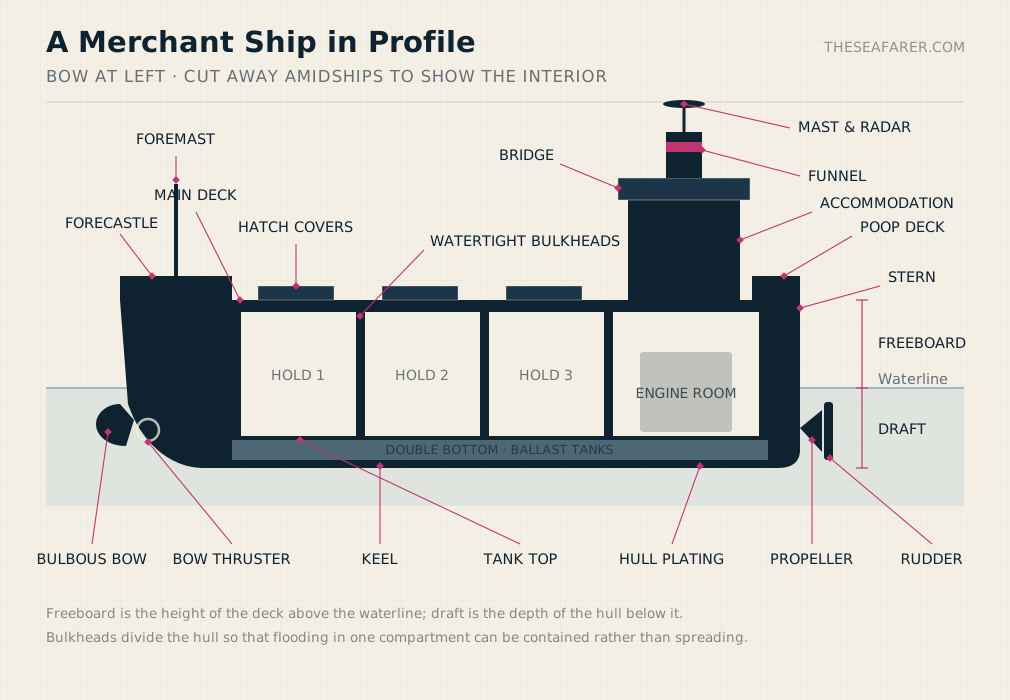
With those terms set, the rest of the tour is just a matter of walking from one end to the other. The diagram below labels the major parts of a typical cargo ship in one view, and the sections that follow take each in turn.
The Bow
The bow cuts the ship through the water, and it does more work than its simple shape suggests. The raised deck at the very front is the forecastle, often shortened to fo’c’sle, and it is the ship’s anchor and forward mooring station. Here you find the windlass that hauls the anchor cable, the hawse pipes the cable runs through, the chain locker it stows in, and the bollards and fairleads the mooring lines lead to. When the anchor cable runs out, the forecastle is one of the loudest places on the ship.
Below the waterline, many ships carry a bulbous bow, the rounded protrusion at the stem. It is not decoration: it reshapes the wave the hull makes and can noticeably reduce fuel consumption at service speed. The bow also takes the worst of the weather, and green water, solid seas washing over the deck rather than spray, is a real hazard forward in heavy weather. The bow demands respect.
The Main Deck
Running the length of the ship, the main deck is the working backbone, and where it is open to the sky it is also called the weather deck. What it carries depends entirely on the vessel. On a tanker it is a web of cargo pipelines and manifolds; on a container ship it is stacked boxes and lashing gear; on a general cargo ship it is hatches and cranes. The raised steel wall along the deck edge is the bulwark, which keeps the sea and the crew where they belong.
Walking the deck is never casual. You watch your footing, the weather, and any machinery in motion, because an open deck at sea can turn dangerous in seconds. Good seamanship is largely the habit of moving across it with that awareness switched on.
Cargo Spaces
The reason the ship exists sits below the main deck. The holds are the large spaces that carry the cargo, and the openings into them are the hatches, sealed by heavy hatch covers that sit on raised rims called coamings. It helps to keep the two words straight: the hold is the room, the hatch is the doorway in its ceiling.
Beyond that, the cargo area changes character with the ship. A container ship stows boxes in cell guides below deck and lashed stacks above, secured with twist-locks. A tanker carries its cargo in a run of tanks served by pipelines, a manifold amidships, and a pump room. A bulk carrier holds loose grain, ore, or coal in cavernous holds. A ro-ro ship is built around ramps and vehicle decks. Each type brings its own hazards and its own rules, which is why knowing your ship means knowing what she carries and how.
The Bridge and Accommodation
The block that rises above the main deck, usually well aft on a modern merchant ship, is the superstructure, and it houses both the people and the ship’s command. At the top sits the bridge, the brain of the ship, where officers navigate, steer, and watch the traffic. A modern bridge carries radar, ECDIS, GPS, AIS, radios, and engine controls, and the open platforms to either side are the bridge wings, used for berthing and for conning the ship alongside. The decisions made here set the ship’s path, and even an old hand feels it on entering. If you want to understand what actually happens up there through the quiet hours, the bridge watch is its own discipline.
Below the bridge is the accommodation: the cabins, mess rooms, galley, offices, and on larger ships a small hospital. Plain as it is, it becomes the closest thing to home for weeks at a time, and it is where the crew recovers between watches and the demands of the deck. It is worth seeing what life aboard is actually like in these spaces before you sign on.
Masts and the Funnel
Look up as you cross the deck and two structures stand out. The masts carry the ship’s eyes and voice: radar scanners, navigation lights, antennas, and signal halyards, with the small platform above the bridge, the monkey island, often holding the magnetic compass and more aerials. The funnel aft carries the exhaust uptakes from the engine room below, and its markings usually identify the company that owns or operates the ship. Neither is merely structural; both are part of how the ship sees, signals, and breathes.
The Stern
At the stern the ship finishes her path through the water, and the raised aft deck is the poop deck. Like the forecastle, it is a mooring station, fitted with winches and capstans for the lines that hold her to the berth. It is also one of the most dangerous places on the ship during mooring, because a line under load stores enormous energy and can recoil with lethal force if it parts. Modern guidance no longer relies on painting “snap-back zones” on the deck, since a parting line’s path cannot be reliably predicted; the whole mooring deck is treated as the hazard area whenever lines are under tension, and you keep clear of any loaded line, never standing in the bight of one. Below the poop, the steering gear room houses the rams that turn the rudder.
Below the Waterline
The parts that drive and steer the ship are the ones you rarely see. The propeller, turned by the main engine through a long shaft, pushes her forward, and the rudder just aft of it steers her. Many ships also carry a bow thruster, a transverse tunnel near the bow that lets them move sideways at low speed when berthing without tugs. Long fins at the turn of the hull, the bilge keels, quietly damp the ship’s roll. None of this is visible from the deck, but it is the difference between a hull that floats and a ship that goes where you point her.
How a Ship Is Built
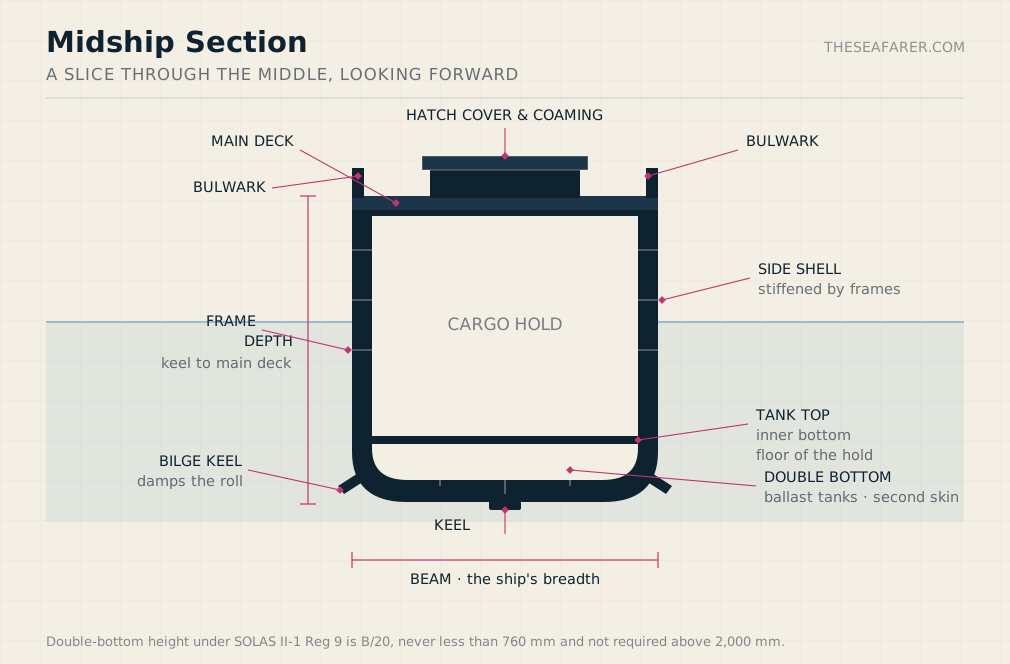
Under the paint, a ship is a structure designed to stay afloat even when things go wrong, and a handful of terms describe how. The keel runs along the very bottom on the centerline and is the ship’s backbone, the spine the rest of the structure is built around. The sides and bottom are the shell, or hull plating, stiffened from inside by closely spaced frames.
Two features matter especially for safety. Transverse bulkheads divide the hull into separate watertight compartments, so that flooding in one space can be contained rather than spreading through the whole ship. And most ships have a double bottom: a second watertight skin a meter or so above the keel, which protects the cargo spaces if the ship grounds and forms tanks for ballast water and fuel. The floor of the hold, on top of that double bottom, is the tank top. The width of the hull is her beam, and her height from keel to main deck is her depth. The cross-section below cuts through the middle of the ship to show how these fit together.
Reading the Hull: Waterline, Draft, and the Load Line
A ship’s hull carries its own set of marks, and learning to read them tells you a great deal at a glance. The waterline is simply where the surface meets the hull. The depth of the hull below it is the draft, which tells you how deeply she is loaded, and the height of the deck edge above it is the freeboard, the reserve of buoyancy that keeps the sea out. The more cargo a ship carries, the deeper her draft and the smaller her freeboard.
That balance is not left to judgment. Painted on each side amidships is the load line, or Plimsoll mark, a disc and a comb of lines showing the maximum legal loading for different seasons and waters. It exists because owners once loaded ships until they were barely seaworthy, and the nineteenth-century campaigner Samuel Plimsoll forced the marks into law to stop it. When a ship floats no deeper than her load line, she still has the freeboard she needs to survive heavy weather.
Why Knowing the Ship Matters
Learning the parts of a ship is not about memorizing a list. It is about awareness, the kind that lets you respond before you have had time to think. When an instruction comes over the radio or an alarm goes in the night, the seafarer who knows the layout by heart moves while others are still working out where to go. You walk differently, work more safely, and react faster once the ship beneath your boots has stopped being a maze. The rest of seamanship grows from there.
Key Terms at a Glance
The most useful terms from the tour are gathered here for quick reference. Each is defined in full, alongside the rest of the ship’s vocabulary, in the nautical glossary.
| Term | What it is |
|---|---|
| Bow / Stern | The front of the ship and the back of the ship. |
| Port / Starboard | Left and right when facing forward. Port is red, starboard is green. |
| Amidships | The middle of the ship, between bow and stern. |
| Forecastle | The raised deck at the bow; the forward anchor and mooring station. |
| Main deck | The principal deck running the ship’s length; the open part is the weather deck. |
| Hold / Hatch | The space that carries cargo, and the covered opening into it. |
| Superstructure | The block above the main deck housing the bridge and accommodation. |
| Bridge | The navigating station from which the ship is steered and conned. |
| Funnel | The structure carrying engine exhaust, usually marked with company colors. |
| Poop deck | The raised deck at the stern; the after mooring station. |
| Hull | The watertight body of the ship; its plating is the shell. |
| Keel | The backbone running along the bottom centerline. |
| Bulkhead | A watertight wall dividing the hull into separate compartments. |
| Double bottom | A second skin above the keel, used for ballast and grounding protection. |
| Rudder / Propeller | The surfaces that steer the ship and drive her forward. |
| Bulbous bow | The rounded underwater bow that reduces wave-making and saves fuel. |
| Waterline | Where the sea’s surface meets the hull. |
| Draft | The depth of the hull below the waterline; how deeply she is loaded. |
| Freeboard | The height of the deck above the waterline; the reserve of buoyancy. |
| Load line | The Plimsoll mark showing the maximum legal loading. |
Frequently Asked Questions
What is the front and back of a ship called? The front is the bow and the back is the stern. Anything toward the bow is forward, anything toward the stern is aft, and the middle of the ship is amidships. These directions stay fixed no matter which way you are facing.
Which side is port and which is starboard? Facing forward, port is your left and starboard is your right. Port and left both have four letters, which is the easiest way to remember it. By international rule a ship shows a red light to port and a green light to starboard.
What is the difference between a hold and a hatch? The hold is the large space inside the ship that carries cargo. The hatch is the opening in the deck above it, closed by a watertight hatch cover. In short, the hold is the room and the hatch is the doorway into it.
What is the bulbous bow for? The bulbous bow is the rounded bulge below the waterline at the front of many ships. It changes the pattern of waves the hull creates, reducing resistance and saving fuel at the ship’s normal service speed. It is an efficiency feature, not just part of the shape.
What is the difference between draft and freeboard? Draft is the depth of the hull below the waterline and shows how heavily the ship is loaded. Freeboard is the height of the deck above the waterline and represents the ship’s reserve of buoyancy. As cargo is loaded, draft increases and freeboard decreases.
What is the Plimsoll line? The Plimsoll line, or load line, is a mark painted on each side of the hull amidships showing the maximum depth to which a ship may legally be loaded in different seasons and waters. It is named after Samuel Plimsoll, who campaigned in the nineteenth century to outlaw the overloading of unseaworthy ships.
Why do ships have a double bottom? A double bottom is a second watertight skin built above the keel. It protects the cargo spaces from flooding if the ship runs aground, and the space between the two skins is used to carry ballast water and fuel. Together with watertight bulkheads, it is one of the main features that keep a damaged ship afloat.
What is the superstructure of a ship? The superstructure is the structure built above the main deck, which on most modern merchant ships houses the bridge at the top and the crew accommodation below. It is distinct from the hull, which is the watertight body of the ship in the water.